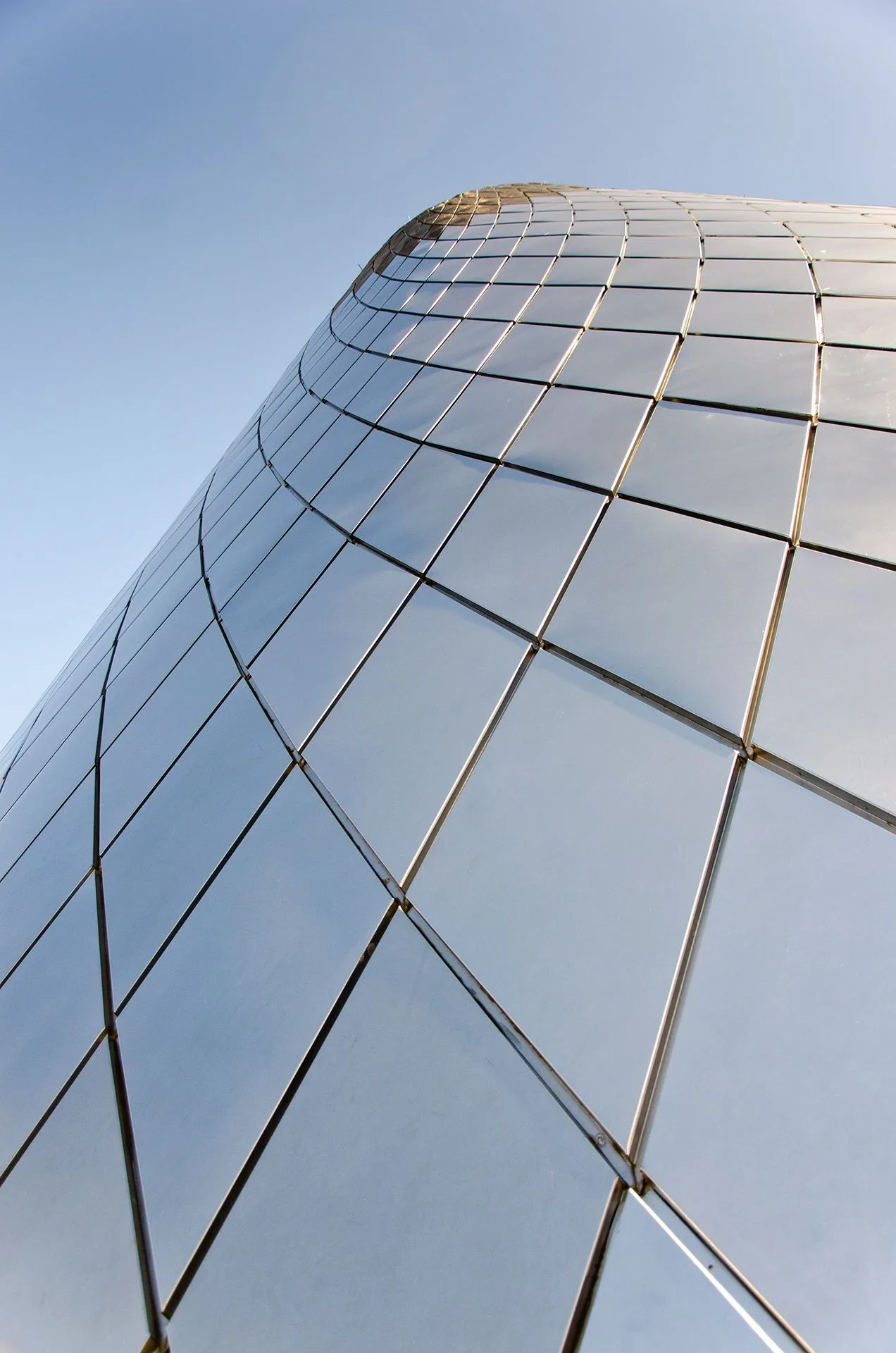
Waterfront Commercial Tower, Dubai

Project · Dubai, UAE

Waterfront Commercial Tower

A 10,000 m² unitised glazed curtain wall on a high-rise waterfront landmark in Dubai — engineered for hurricane-rated wind loads, marine-grade corrosion resistance and premium acoustic comfort.

10,000 m²

Unitised curtain wall

≤ 4.5 kPa

Peak wind pressure

STC 42 dB

Acoustic rating

≤ 1.4

U-value W/m²·K

Performance Specification

Every façade module was specified, glazed and tested to meet a demanding coastal high-rise envelope brief.

Performance Indicator Target Test Standard
Peak structural wind pressure ≤ 4.5 kPa (tower top, Exposure D) ASTM E330 / ASCE 7-22
Watertightness 750 Pa — no leakage ASTM E331 / AAMA 501.1
Hurricane impact Missile Level D — 8,000 cycles ASTM E1886 / E1996
Air permeability ≤ 0.2 L/s/m² @ 300 Pa ASTM E283
Acoustic performance STC ≥ 42 dB / OITC ≥ 36 dB ASTM E90
Solar heat gain SHGC ≤ 0.22 / VLT ≥ 40% ISO 15099 / EN 410
Thermal transmittance U ≤ 1.4 W/m²·K EN 673 / ISO 10211

Hurricane impact detail: lower zone Large Missile (Level D — 9 lb 2×4 @ 50 ft/s); upper zone Small Missile (Level A).

Insulating Glass Unit (IGU)

Outer lite
8 mm fully-tempered clear glass + high-selectivity Solar Control Low-E coating (surface 2)
Cavity
16 mm warm-edge spacer, 90% argon fill
Inner lite
12 mm impact-laminated: 6 mm semi-tempered + 2.28 mm PVB / SentryGlas SGP + 6 mm semi-tempered
Frame
6063-T6 high-strength aluminium (split mullion / transom), factory structural silicone

Marine Environment & Corrosion Protection

Sited on a high-humidity, high-salinity waterfront, the envelope demands marine-grade durability across every exposed component.

01

Exposed Aluminium

All visible aluminium finished to Qualicoat Class 3 powder coating or anodising ≥ 25 µm for long-term coastal resistance.

02

Fixings & Brackets

Anchors, brackets and fasteners specified in 316 stainless steel or zinc-nickel dual coating to prevent chloride corrosion.

Compliance

Engineered to international codes

UAE Fire & Life Safety Code · ASCE 7-22 (wind) · ASTM test suite

Request a Specification Back to Projects

The engineering challenge on the Dubai waterfront

A 10,000 m² glazed envelope on an exposed waterfront site has to reconcile three demands that pull in different directions: keep hurricane-driven rain out, keep solar gain down, and keep the erection programme fast enough to close the building on time. Stick-built glazing struggles on all three because so much of the sealing happens on the scaffold, in the wind, at height.

Why unitised was chosen

The answer was to move the critical work indoors. Each module was glazed, sealed and inspected in the factory, then craned into place as a complete unit. That single decision removed weather from the programme and made the sealing quality repeatable rather than dependent on site conditions.

Verified performance

  • Structural wind load: 4.5 kPa, tested to ASTM E330.
  • Water tightness: 750 Pa with no leakage, tested to ASTM E331 — the threshold that matters most for driven rain on a coastal tower.
  • Air permeability: Class A4 to EN 12152, limiting infiltration load.
  • Acoustic: up to STC 42 dB with a laminated inner lite, cutting traffic and waterfront noise.
  • Thermal: U-value of 1.4 W/m²·K or better from the Low-E insulated glass unit, holding cooling demand down despite the large glazed area.
  • Hurricane impact and cyclic movement: validated through an 8,000-cycle programme.

What this means for a similar building

If you are planning a glazed tower on an exposed coastal or waterfront plot, the same approach applies. The decisive step is setting the water and wind performance targets early, then proving them in the test rig before fabrication starts — see our guide to curtain wall performance testing and the unitised glazing system itself.

Where this system fits elsewhere

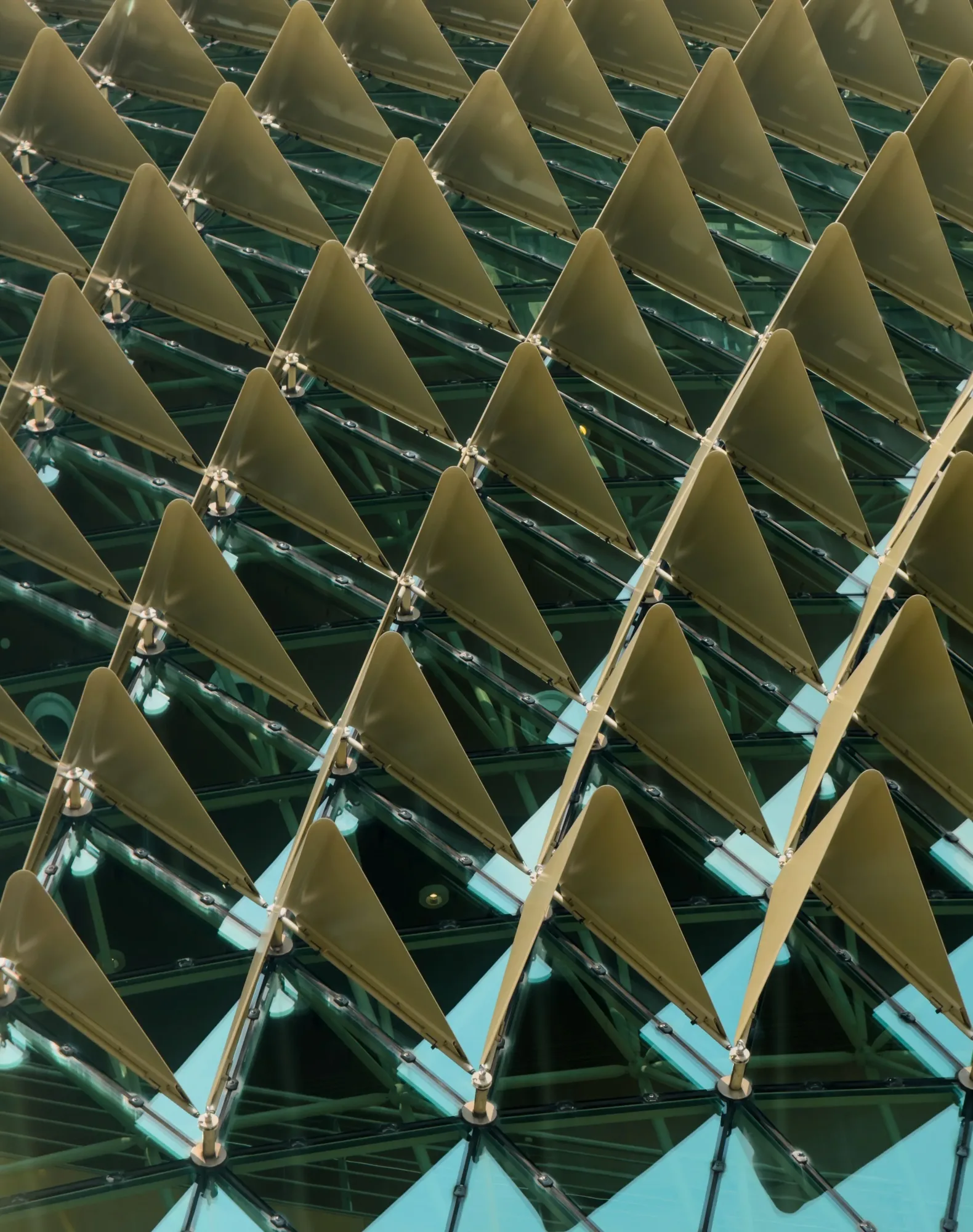
Where the brief is shading and identity rather than a sealed envelope, we build the opposite solution: a passive kinetic louver facade, as delivered on the CBD tower in Nairobi and at far larger scale on the landmark pavilion in Doha. Spandrels, soffits and parapets on glazed towers are finished in aluminium cladding to match the frame, and the marine-grade specification logic is the same across all three systems.

More work

Other INDECO projects

The same engineering team delivers the opposite approach — passive, wind-driven shading — on two landmark installations.

Browse every reference on the projects page, or compare the kinetic louver, unitised glazing and aluminium cladding systems.