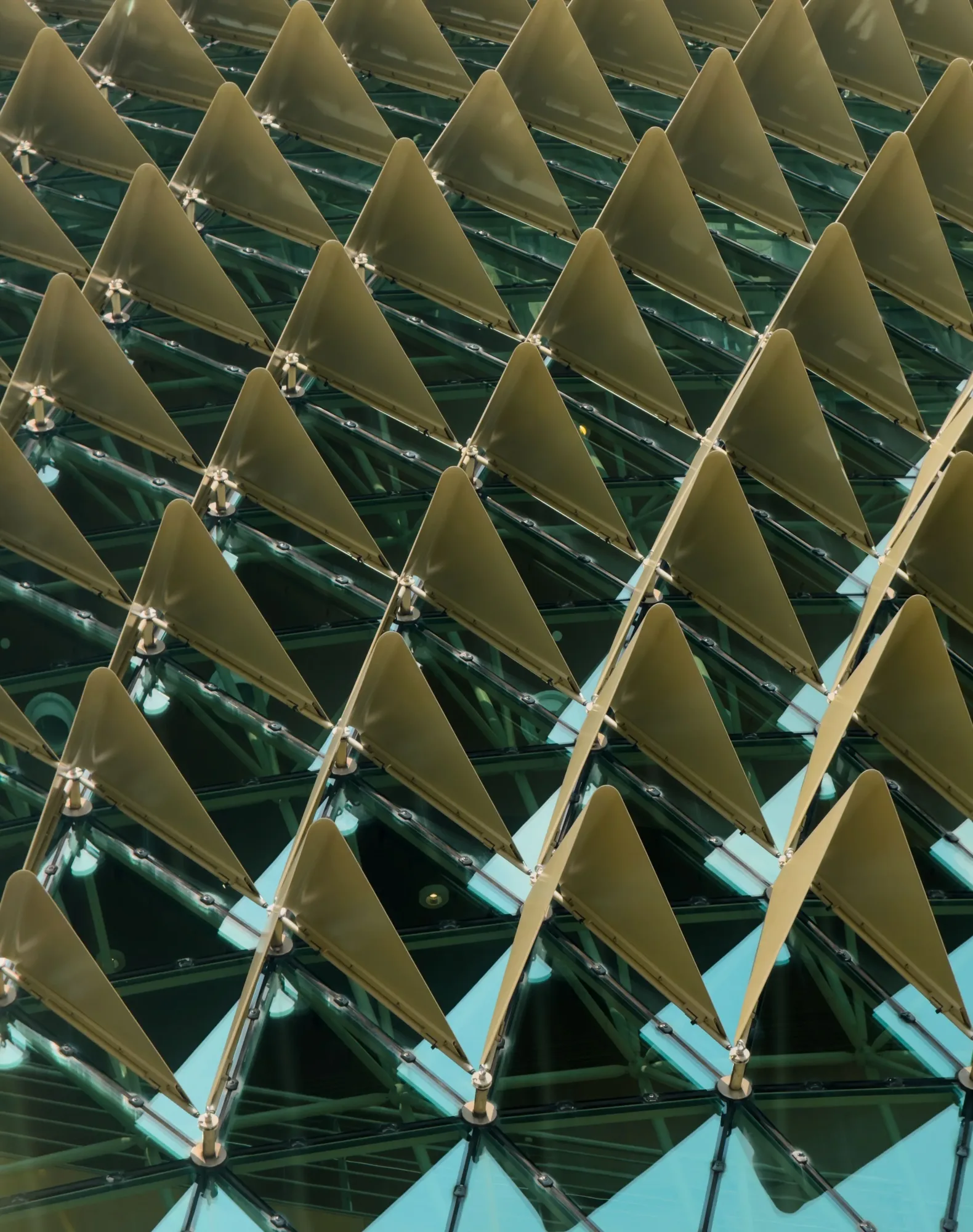
Cultural Landmark Pavilion, Doha

Project · Doha, Qatar

Cultural Landmark Pavilion

An interactive kinetic installation on a Doha cultural landmark — tens of thousands of wind-driven aluminium panels that turn the Gulf's heat and Shamal winds into a living play of light and shadow, with zero power drawn.

45 m/s

Doha design wind ref

40,000+

Kinetic panels

Zero W

Passive, no power

6063-T5

Aluminium blades

Wind-Driven Kinetic System

Reference performance for INDECO's passive kinetic louver system. Figures marked ref are regional / generic references, not project measurements.

Parameter Value Note
Activation Passive, wind-driven No motors, sensors or power ref
Blade material 6063-T5 aluminium 1.5–2 mm wall, 2–4 kg/m² ref
Blade width 150–300 mm Typical range ref
Surface finish Anodised or PVDF coating Project: PVDF pearl-white (2-coat)
Design wind (Doha) 45 m/s, 50-yr return QCS 2014 / ASCE 7-16 ref
Extreme temperature 50°C+ summer peak Shamal wind regime ref
Corrosion class C4–C5 (coastal) Reference ref
Energy Zero Wind-powered motion ref

Wind reference: Doha basic wind speed ≈ 45 m/s (3-second gust, QCS 2014 / ASCE 7-16); Shamal north-westerly winds dominate and drive the critical lateral load. Summer extremes exceed 50°C with a coastal C4–C5 corrosion environment. Regional wind and corrosion values above are references for context; project-specific figures are recorded in the specification block.

Project Specification

Recorded parameters for the Doha cultural landmark kinetic installation.

Installation area
6,500 m² kinetic skin
Kinetic panel count
40,000+ (per brief)
Completion year
2022
Blade finish / colour
PVDF pearl-white (2-coat)

Why Kinetic in Doha's Climate

01

Passive Shading & Cooling

With summer peaks above 50°C, wind-driven louvers self-shade the façade and cut solar gain — no motors, no controls, no electricity.

02

Zero Energy

In a harsh desert climate, passive motion is the most reliable option: no wiring, no maintenance points, no power draw on the grid.

03

Coastal Durability

Specified for a C4–C5 marine environment, the aluminium and finish resist the Gulf's salt-laden Shamal winds for a long service life.

Start Your Project

Planning a kinetic installation in the Gulf?

Request a Specification Back to Projects

Designing for Shamal winds and 50 °C heat

A cultural pavilion is judged on how it moves, so the engineering brief here was unusually demanding: more than 40,000 individual panels had to stay reliable through Doha's Shamal wind season and sustained summer heat above 50 °C, while behaving as a single coherent surface rather than tens of thousands of independent parts.

Reliability at scale

At this quantity, the failure mode is not a single broken panel — it is cumulative wear across thousands of pivots, and the maintenance burden of reaching them. INDECO engineered the assembly around two decisions: keep every panel wind-driven and power-free, and make each pivot a sealed, serviceable bearing rather than a wearing friction joint.

  • Wind design: validated for gusts up to 45 m/s in Shamal conditions.
  • Thermal range: specified for Doha's summer extremes, with finishes and clearances chosen for sustained high-temperature exposure.
  • Panel count: 40,000+ moving elements, factory-set to a common tolerance so the field reads as one surface.
  • Operation: zero electrical power, no control system, no sensors.

What made it buildable

Assembling 40,000 moving parts on site would have been unmanageable. Modules were pre-assembled and set in the factory, so installation was largely a matter of fixing and aligning complete units — the same principle that makes unitised glazing fast on a tower.

Considering something similar?

Large kinetic installations succeed or fail on the pivot detail and on how the array is zoned for maintenance access. Both are far cheaper to resolve at design stage than after fabrication. Our kinetic curtain wall specification guide sets out the wind-load, alloy and finish decisions in detail, and you can send us your drawings for a project-specific view.

Where this system fits elsewhere

The same passive louver principle is applied to a conventional high-rise envelope on the CBD tower in Nairobi, where 9,800 m² of louvres shade an office tower with zero power. Where the brief calls for a sealed, acoustically rated envelope instead, the answer is our unitised glazed curtain wall as built on the waterfront tower in Dubai, with solid zones finished in aluminium cladding. Panel finishes and alloys are covered in the cladding finishes guide.
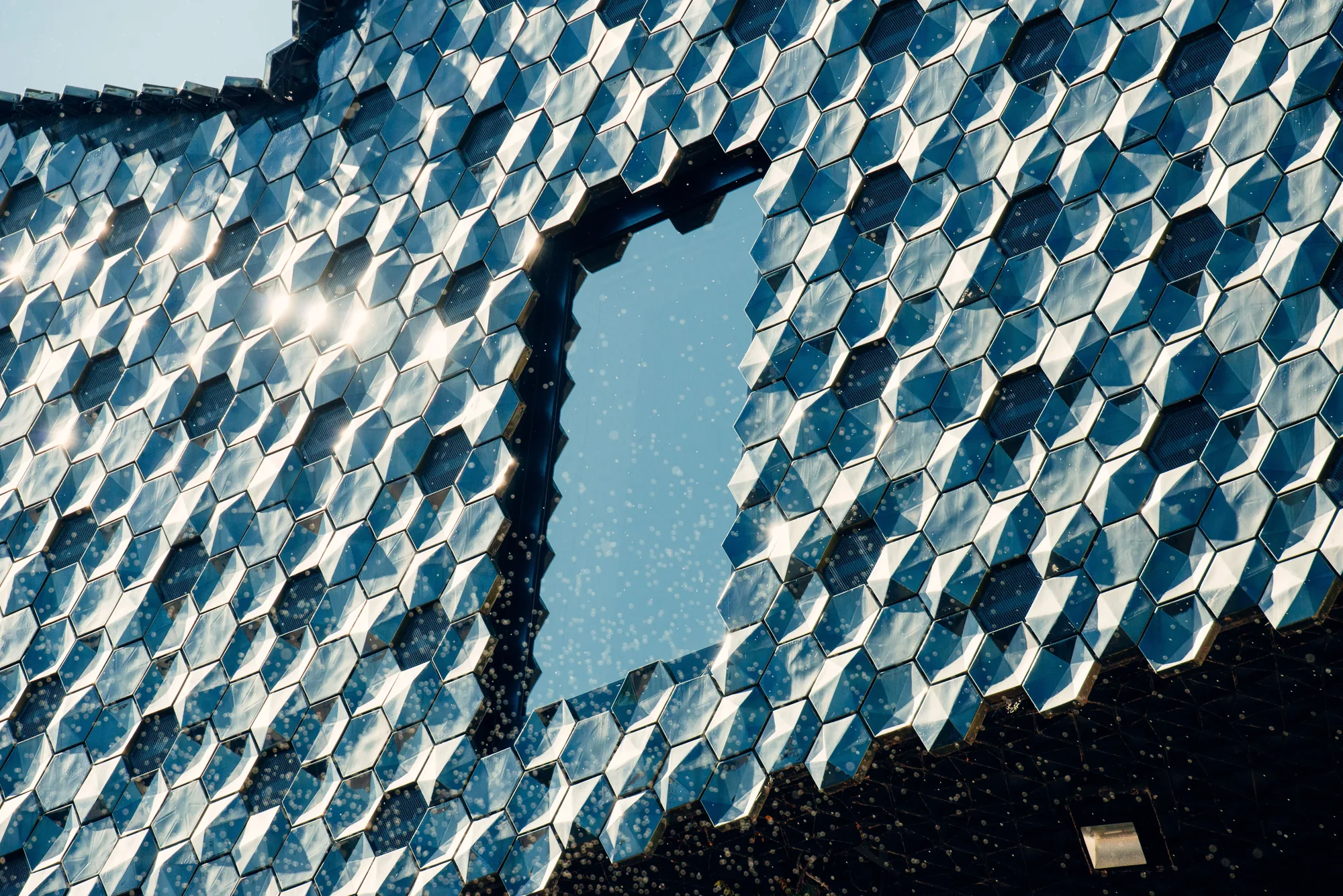
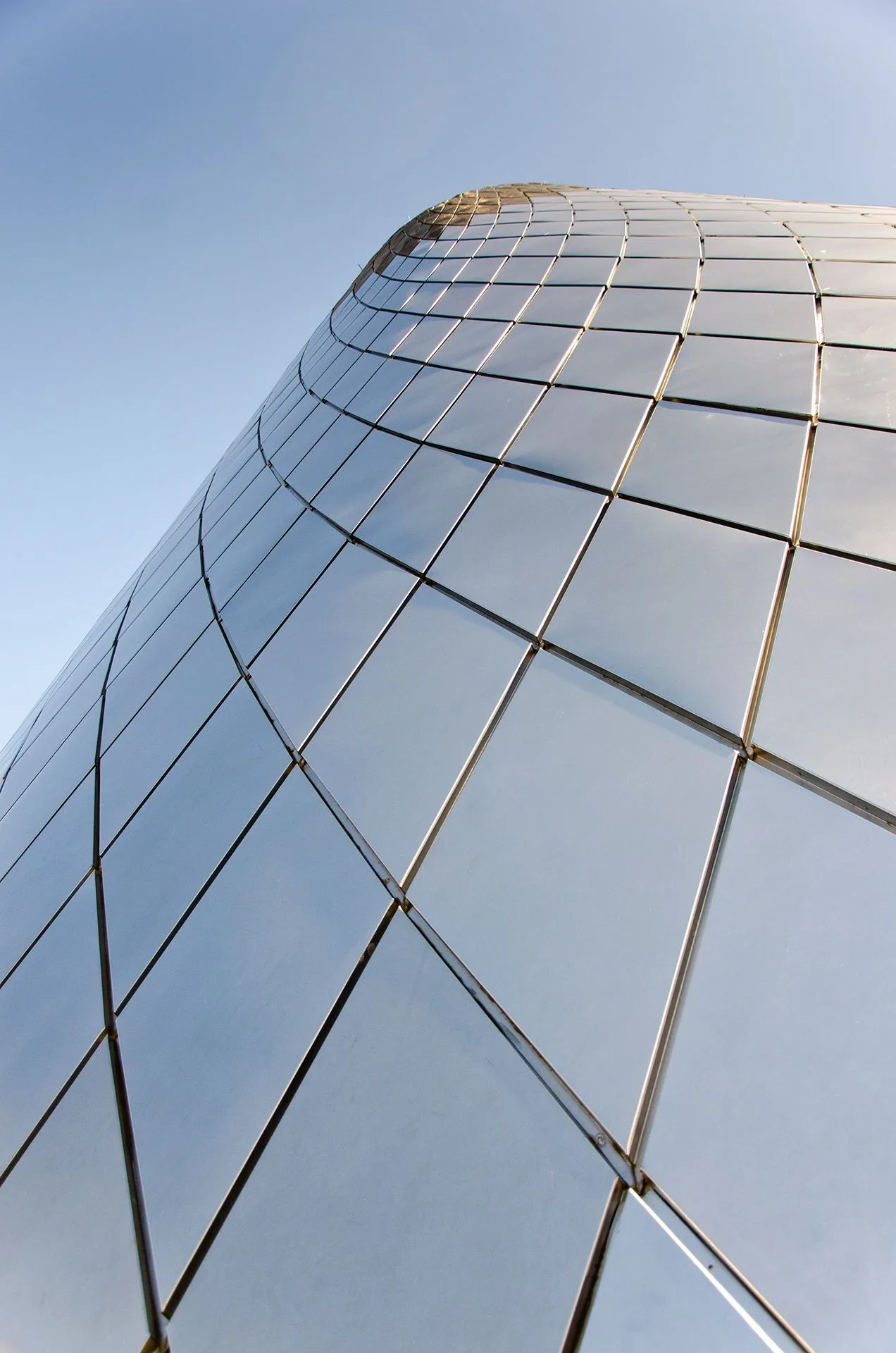
More work

Other INDECO projects

See how the same passive louver logic performs on a working high-rise, and how we solve the sealed-envelope brief instead.

Browse every reference on the projects page, or compare the kinetic louver, unitised glazing and aluminium cladding systems.