Product 03 / Aluminum Cladding
Aluminum Cladding & Ceiling Systems
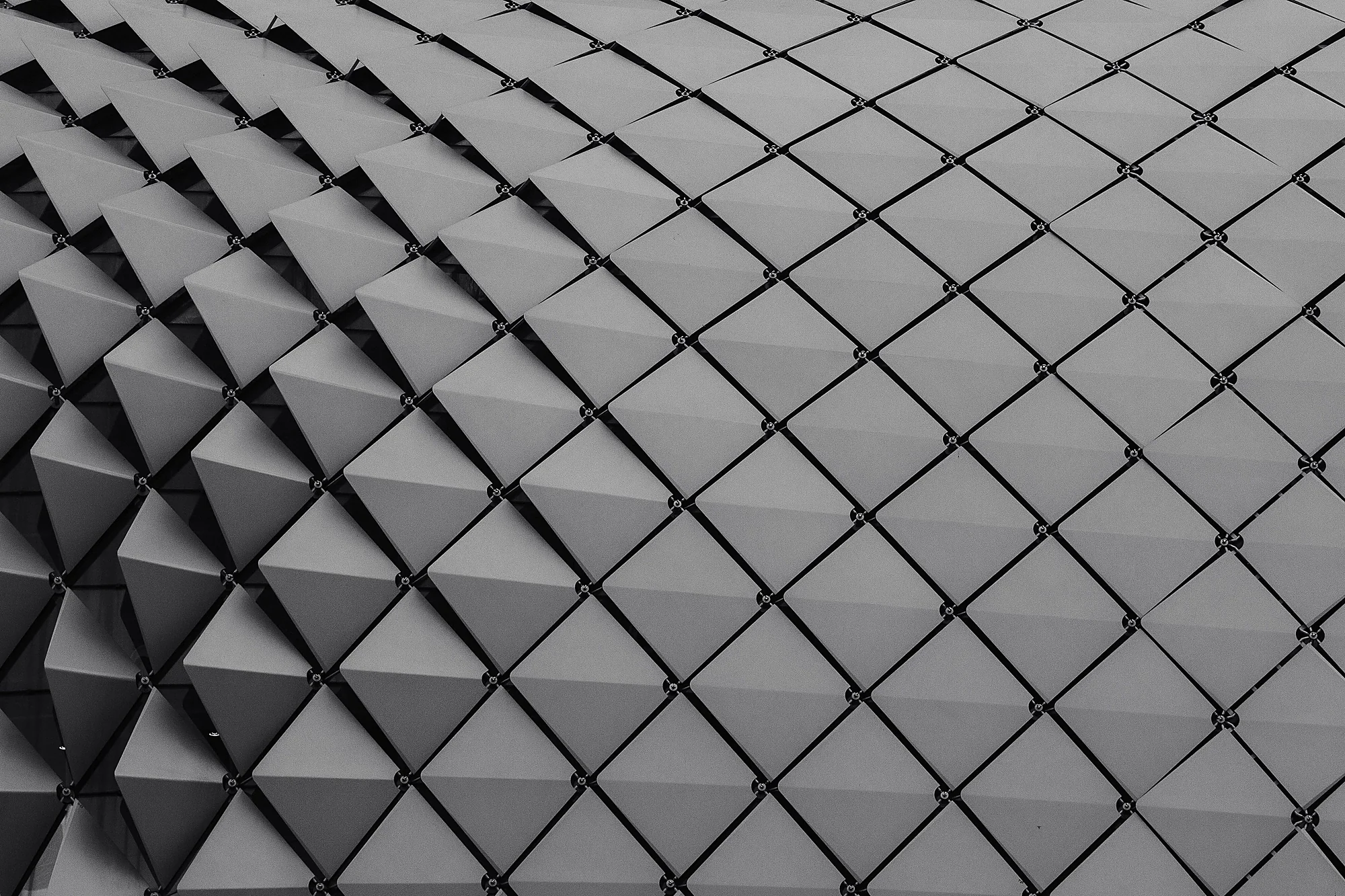
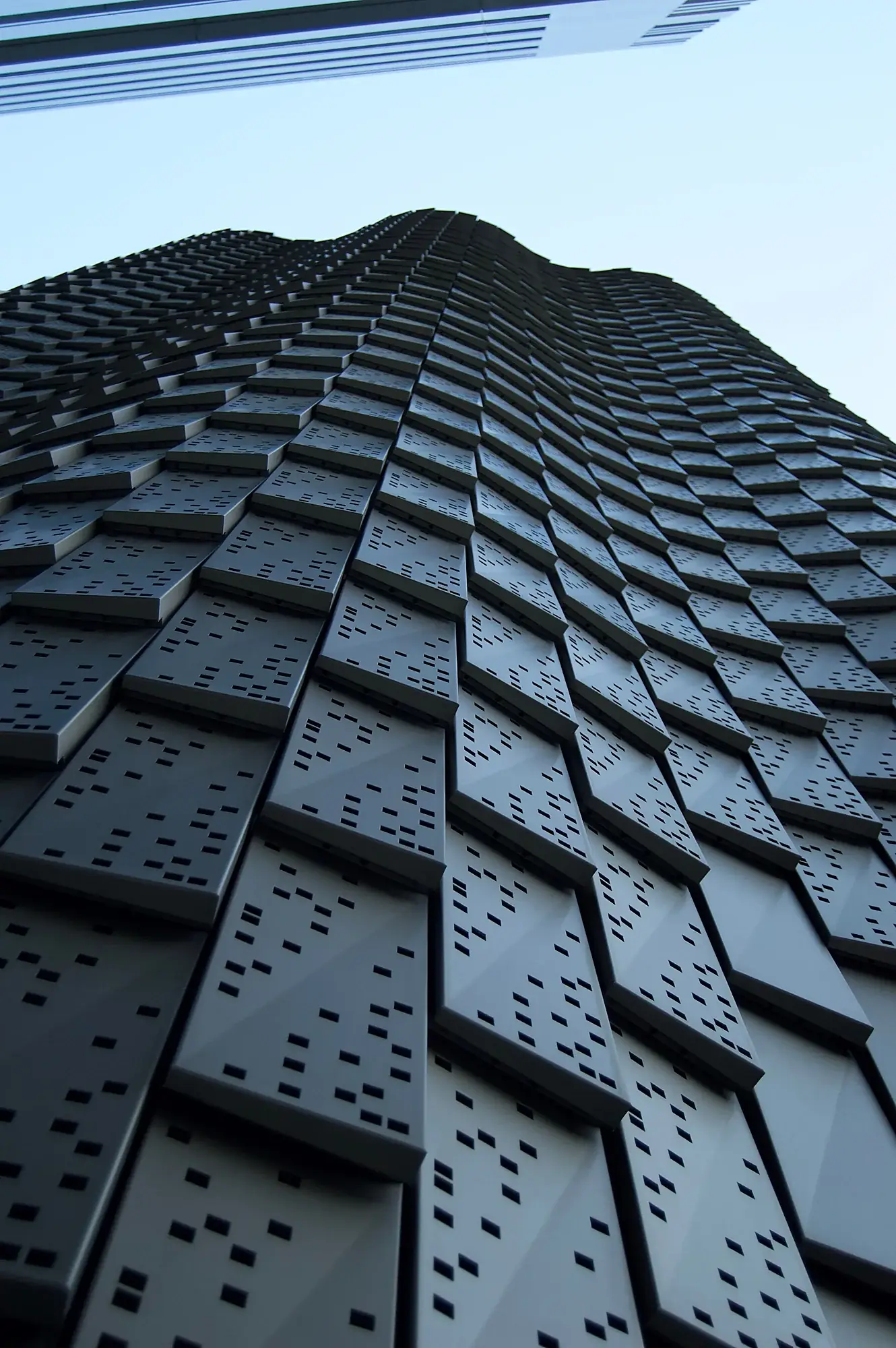
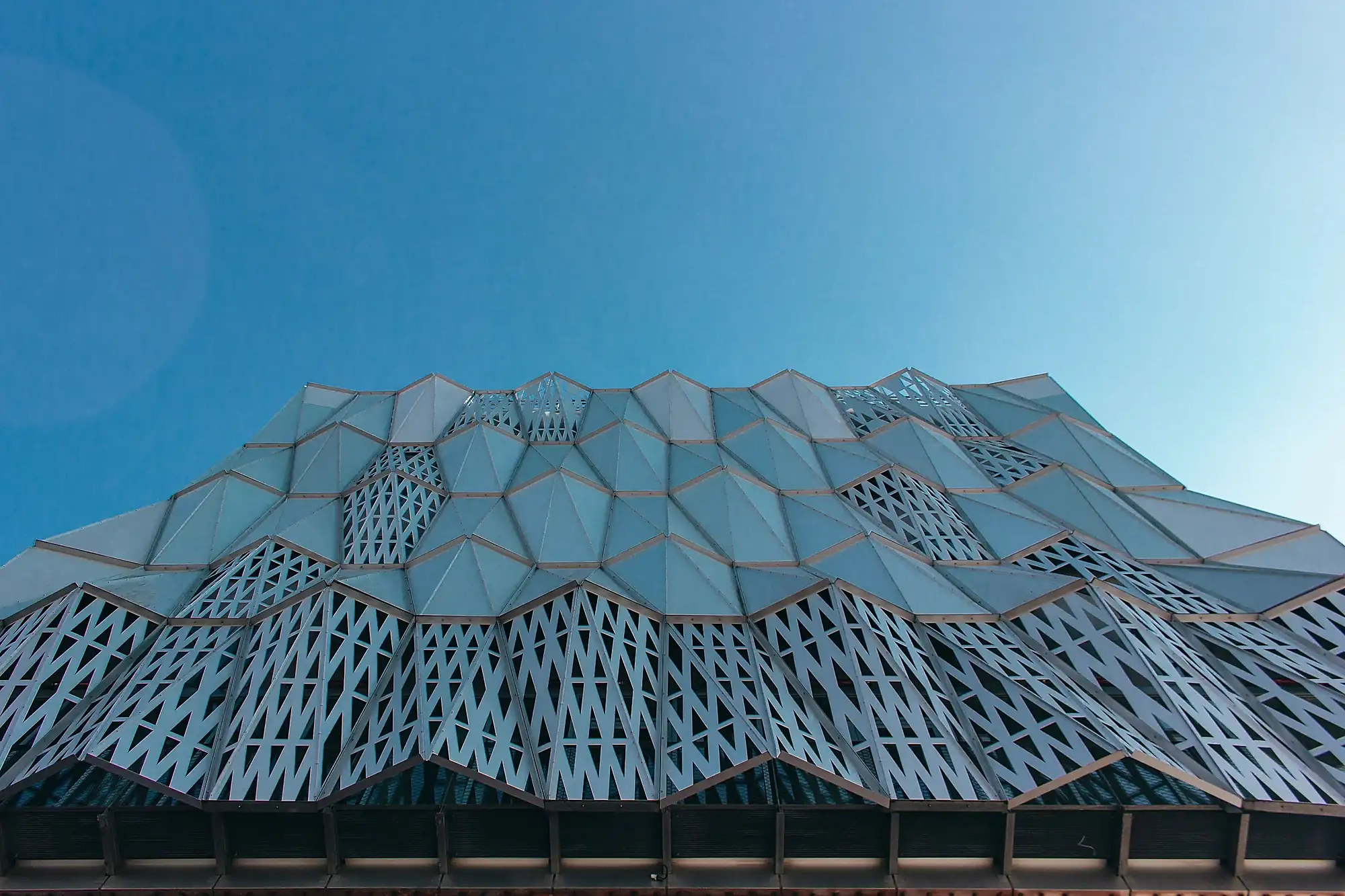
Anodised and PVDF-coated aluminum panels for facades, soffits and ceilings. We cut, form and finish them to your order, then crate them for the site — supplied to projects across East Africa and the Gulf.
Four Ceiling & Cladding Systems
From lay-in tiles to composite panels
Our aluminum ceiling and cladding range covers exposed and concealed grids, deep combination ceilings and composite honeycomb or mineral-wool panels. Panels are formed from 1100, 3003 or 5052 alloy and finished to match the facade.
Lay-in Tile Ceiling
Panels lay into an exposed T-bar grid and lift out for access to services above. Suits offices, schools, banks and retail.
Clip-in Tile Ceiling
Panels clamp into a concealed frame, leaving a shadow-gap joint line across the ceiling plane. Flush ceilings for lobbies and interiors.
Deep-type Combination Ceiling
Layered panels set at different depths build a three-dimensional ceiling. Used on hotel lobbies, airports and transit halls.
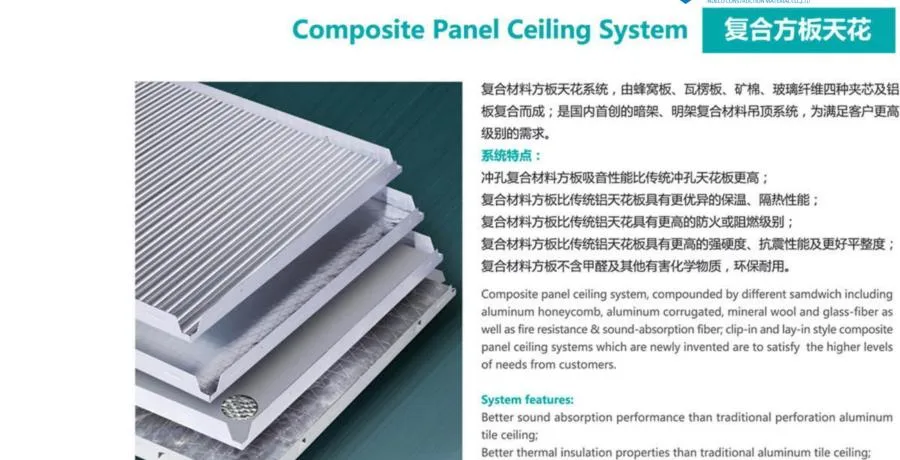
Composite Panel Ceiling
Honeycomb, corrugated and mineral-wool cores bonded between aluminum skins. Higher stiffness, better sound absorption and a flatter face over long spans.
Tested Performance
A2 Fire Rated
Non-combustible to GB 8624-2012
ΔE ≤ 2.0
Batch-to-batch colour control
500–4,000 h
Neutral salt-spray resistance
25+ years
Design life, 96% recyclable
Quality & Manufacturing
Panels are anodised and coloured on continuous coil-to-coil lines, then cut, formed and inspected before packing. Film thickness, colour and flatness are checked panel by panel, so the last crate matches the first.
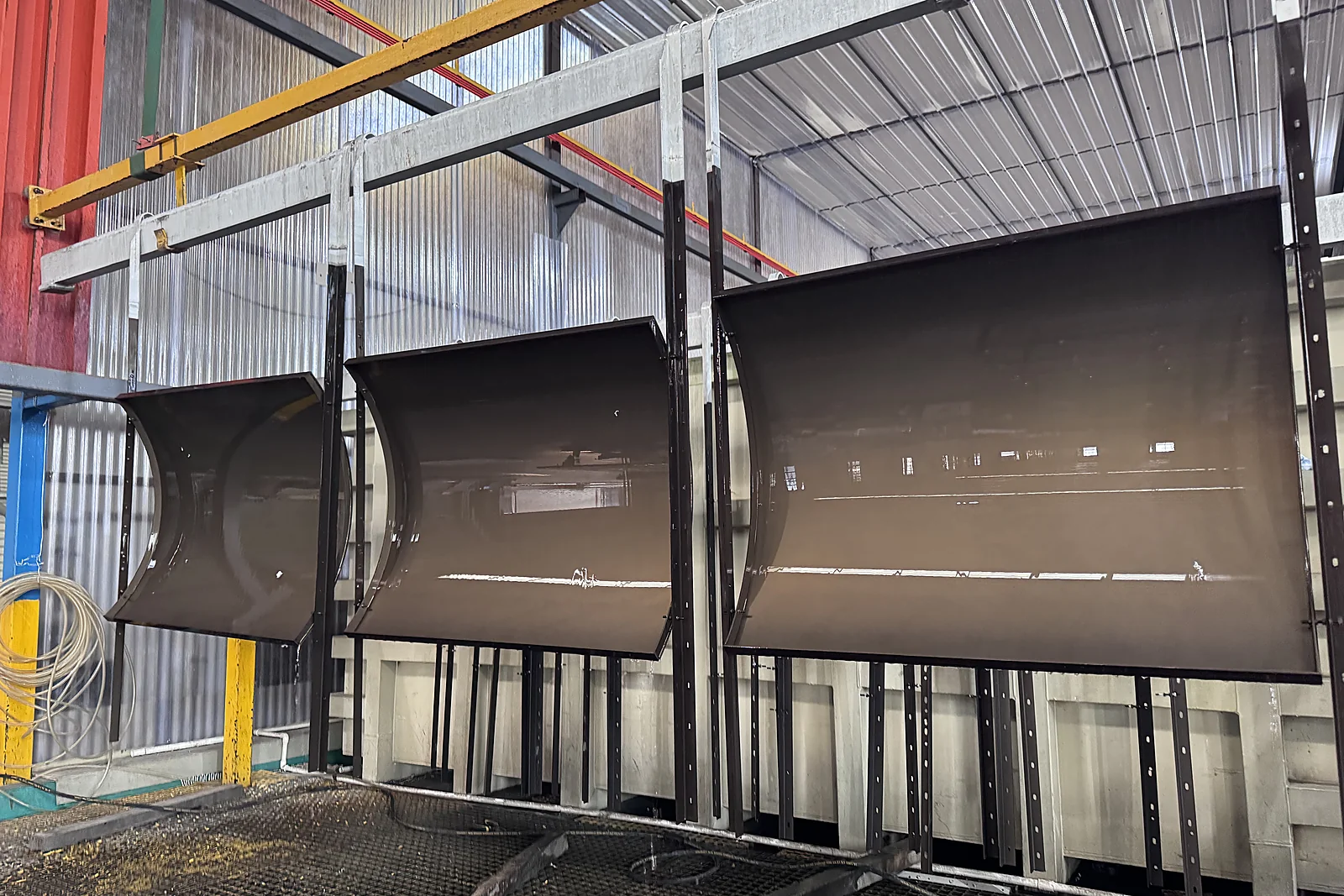
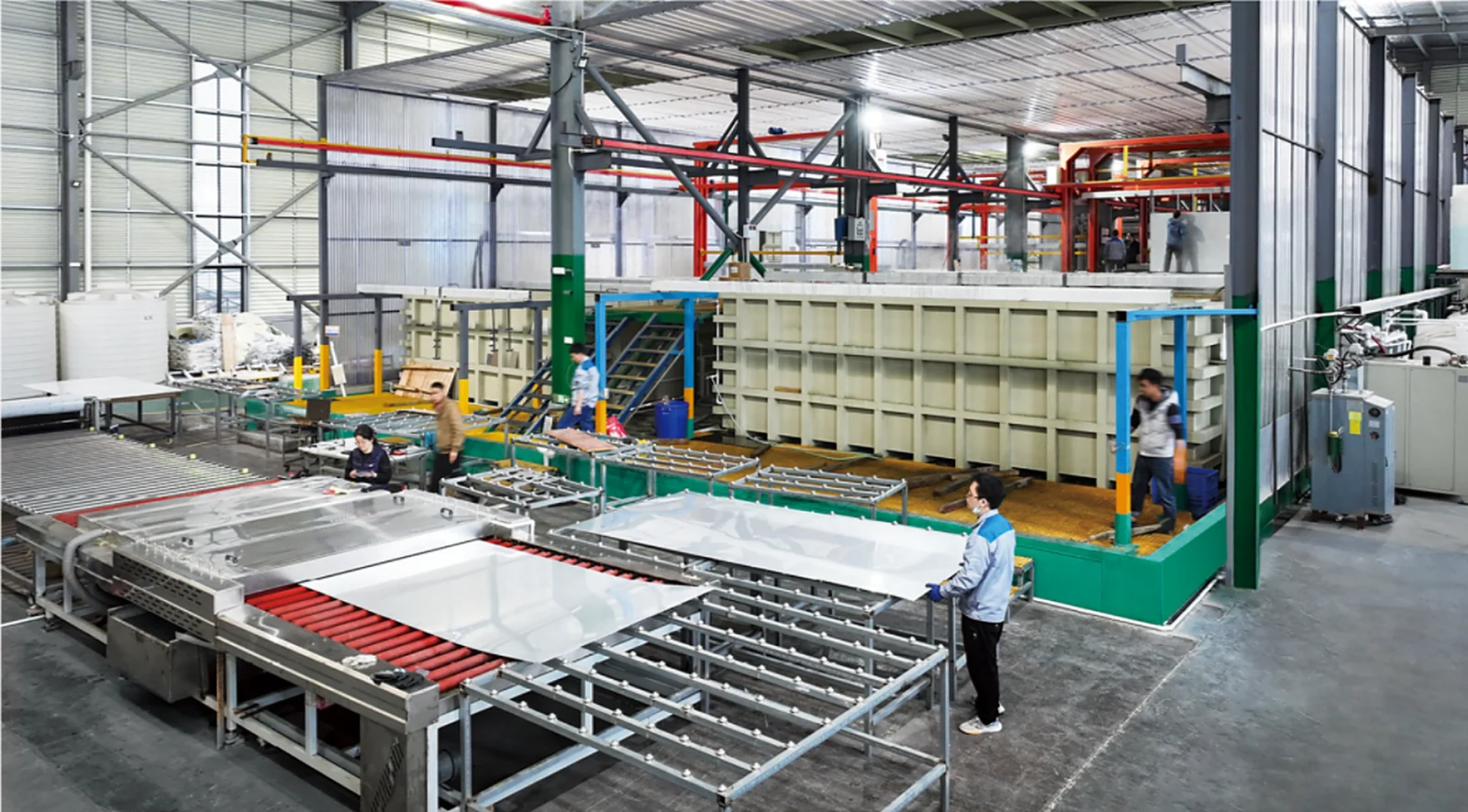
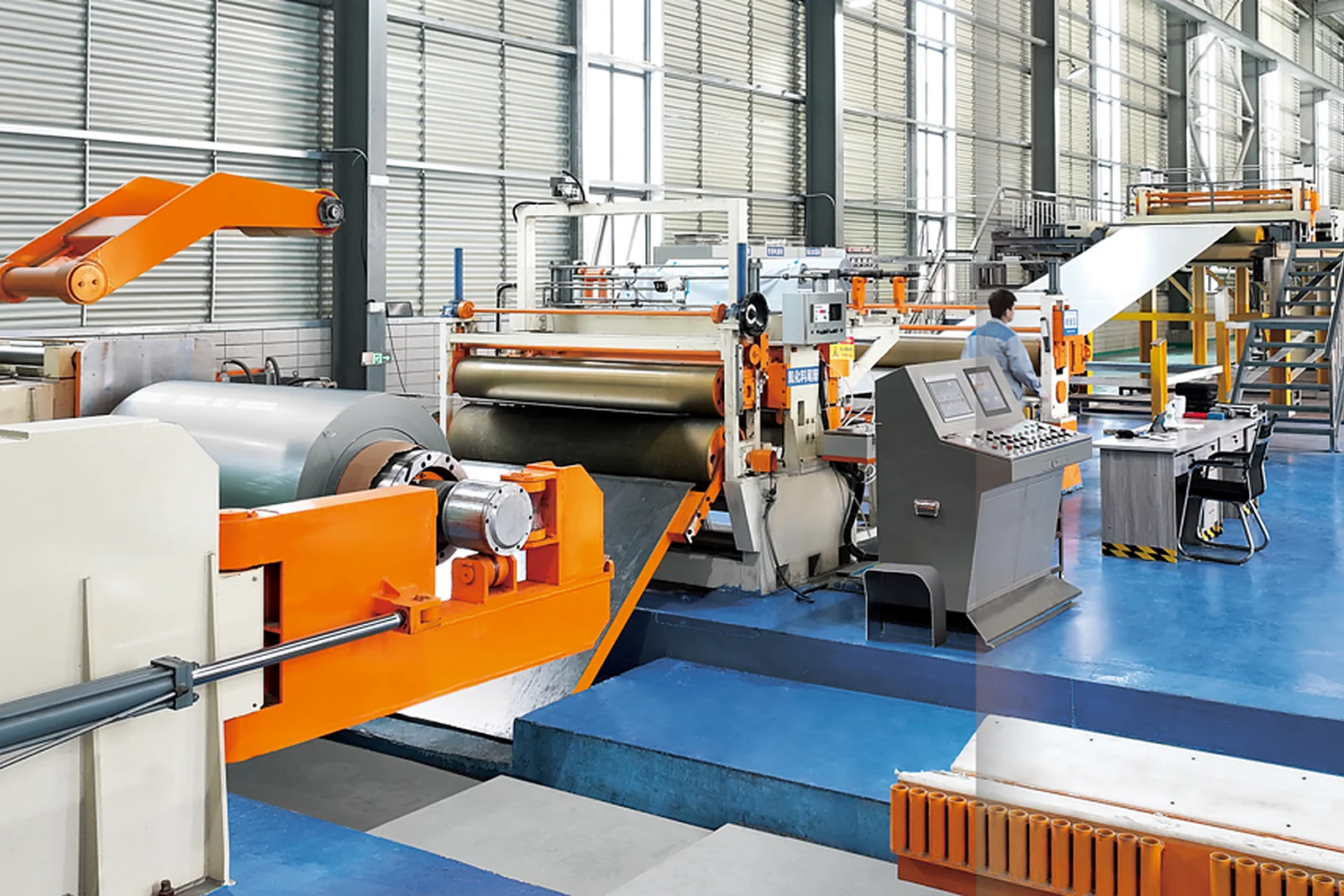
Coil-to-coil anodising line
The coil is anodised and coloured before cutting, so the film is even across every panel.
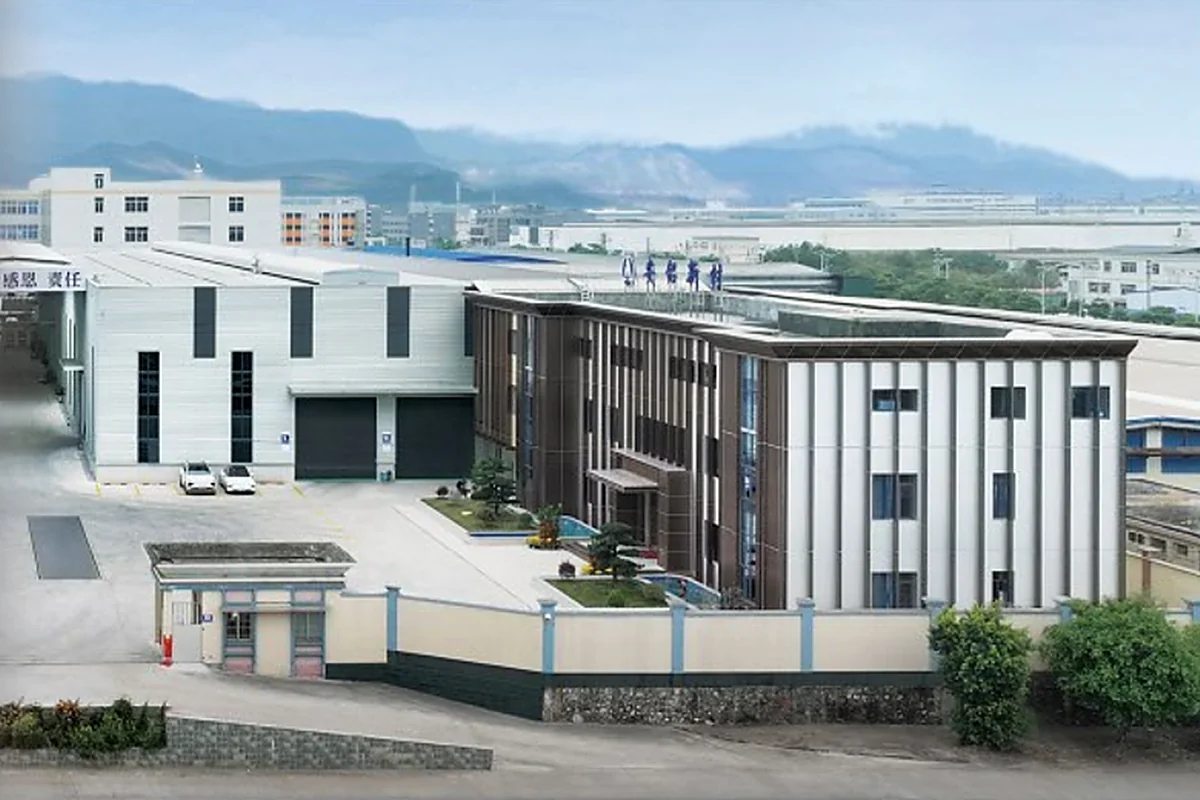
Production mill
Cutting, forming and final inspection are done at the mill before crates leave for site.
Built for consistency
Panels move along roller conveyors through continuous anodising and colouring tanks, with gantry handling and in-line inspection on the same floor.
- Continuous anodising — coil-to-coil lines plus 7 m gantry colouring lines keep output repeatable.
- Colour control — anodic film 5–20 µm; batch colour held within ΔE ≤ 2.0.
- A2 fire performance — non-combustible core, tested to GB 8624-2012.
- Corrosion and life — 500–4,000 h neutral salt spray; 25-year design life, 96% recyclable.
Samples & Real Projects
From finish samples to full-scale facades
See the textures, forms and installed results — from desk-side samples to landmark buildings.
Finishes & Surface Samples
Physical samples so clients can feel the texture and see the colour true to scale.
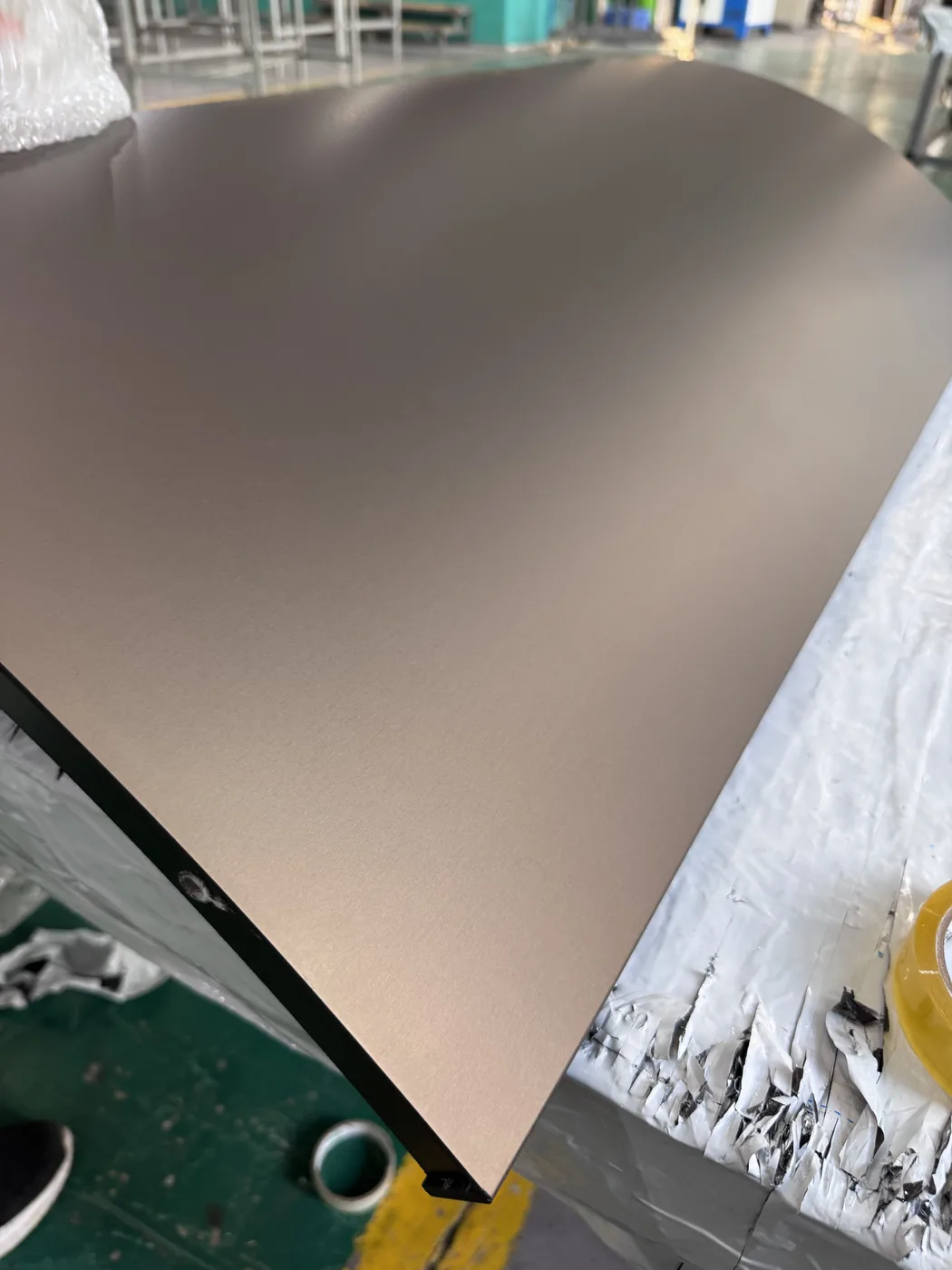
Brushed gold anodised finish — tactile grain, consistent across batches
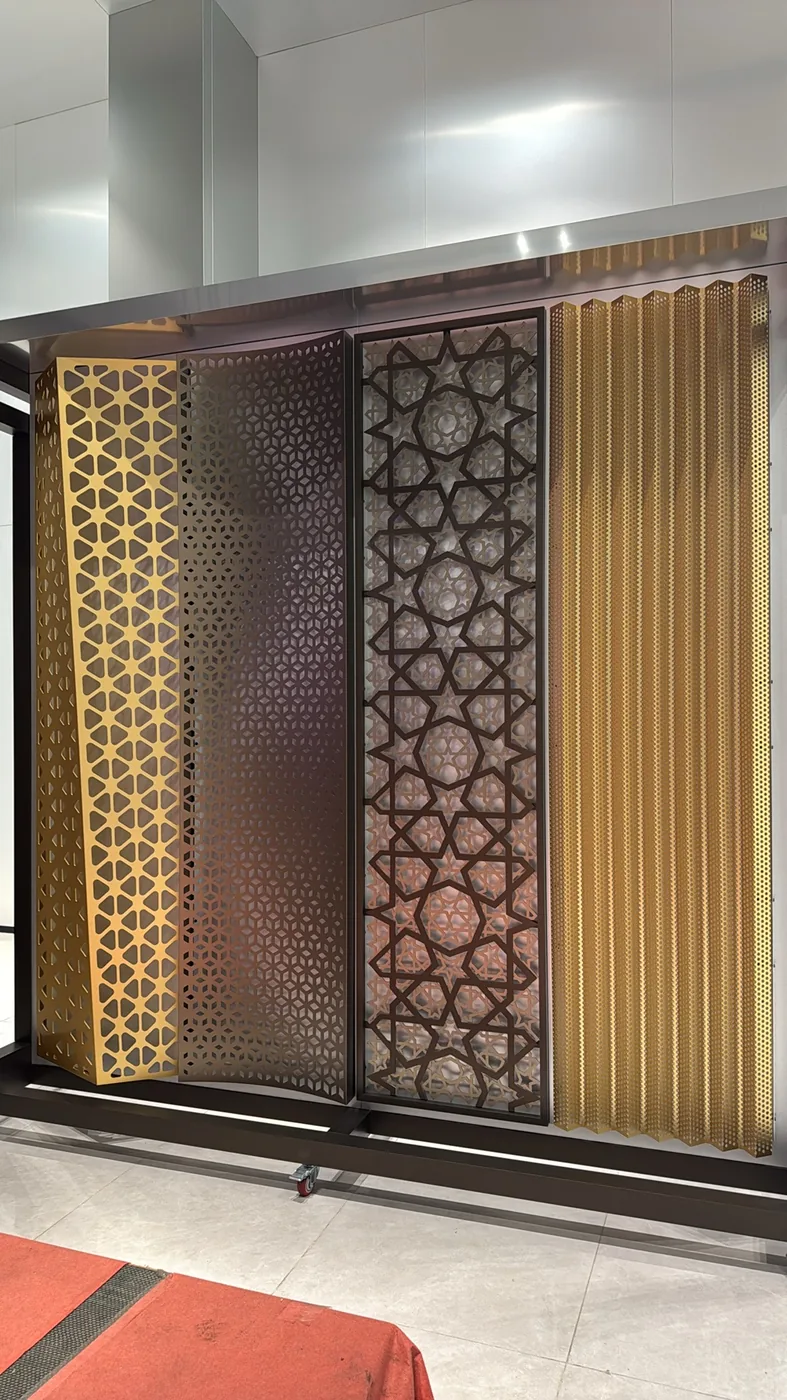
Perforated geometric screen — laser-cut pattern on 3mm aluminium
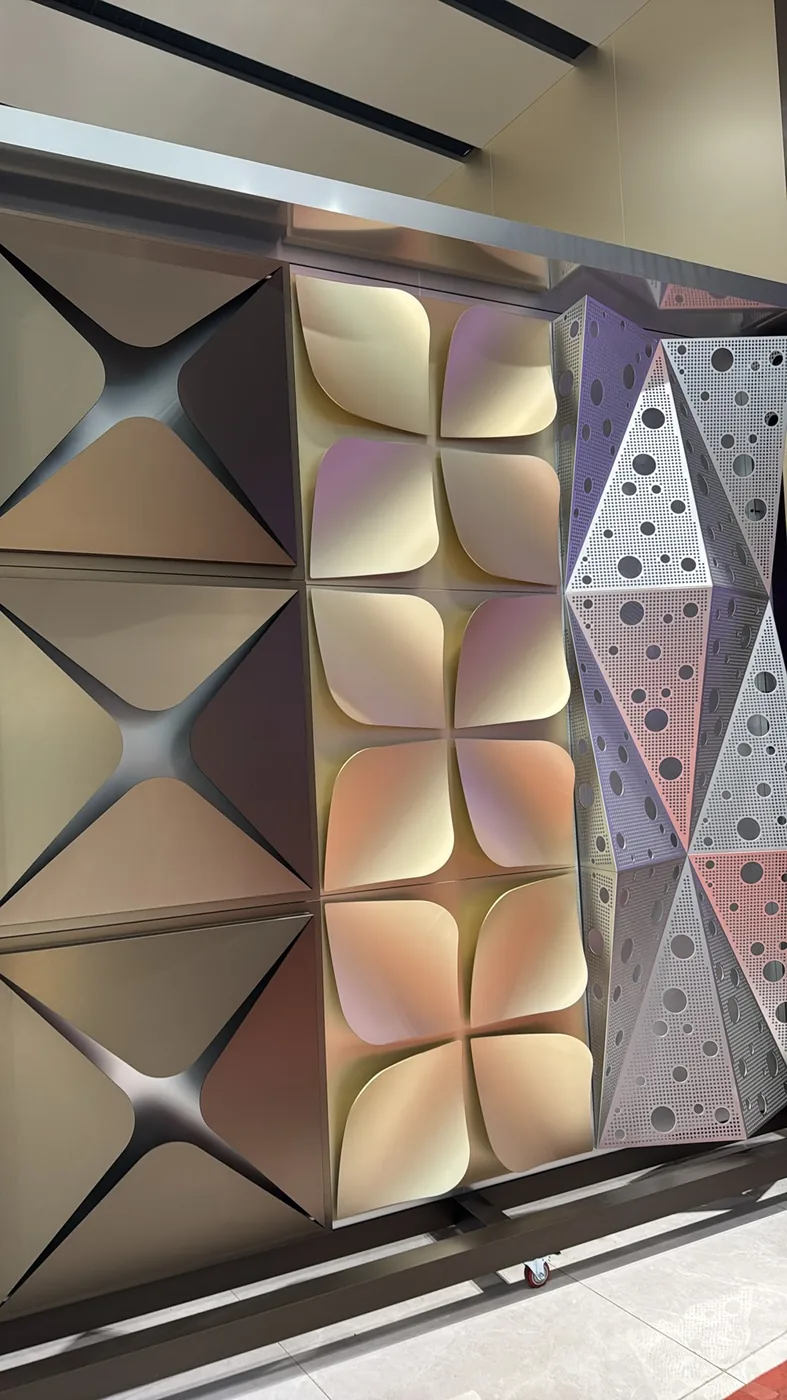
Silver anodised perforated panel — Arabic motif pattern, 2mm thickness
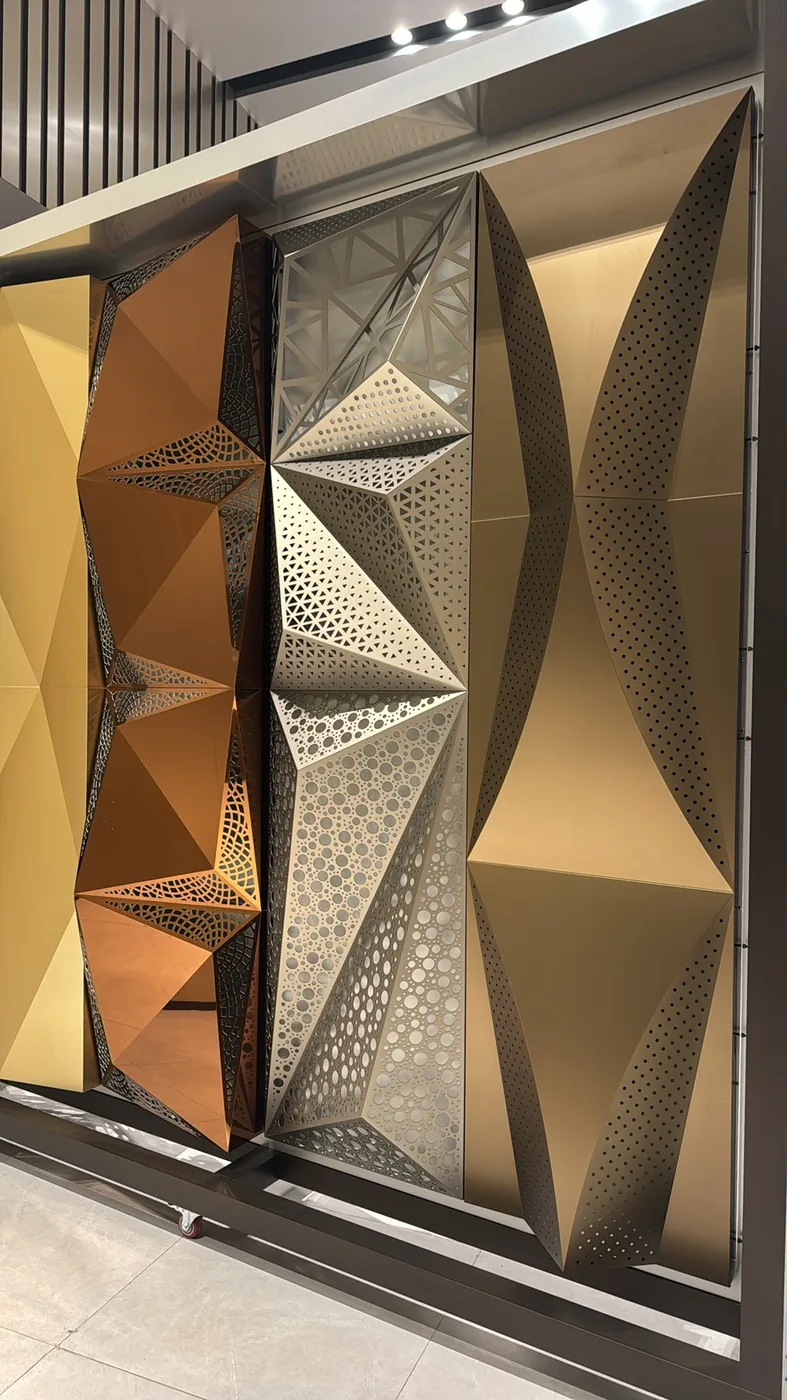
Stucco-textured panel — high-relief finish, hides imperfections
Forming Capability
Flat sheets become curves, angles and complex geometry — panel by panel.
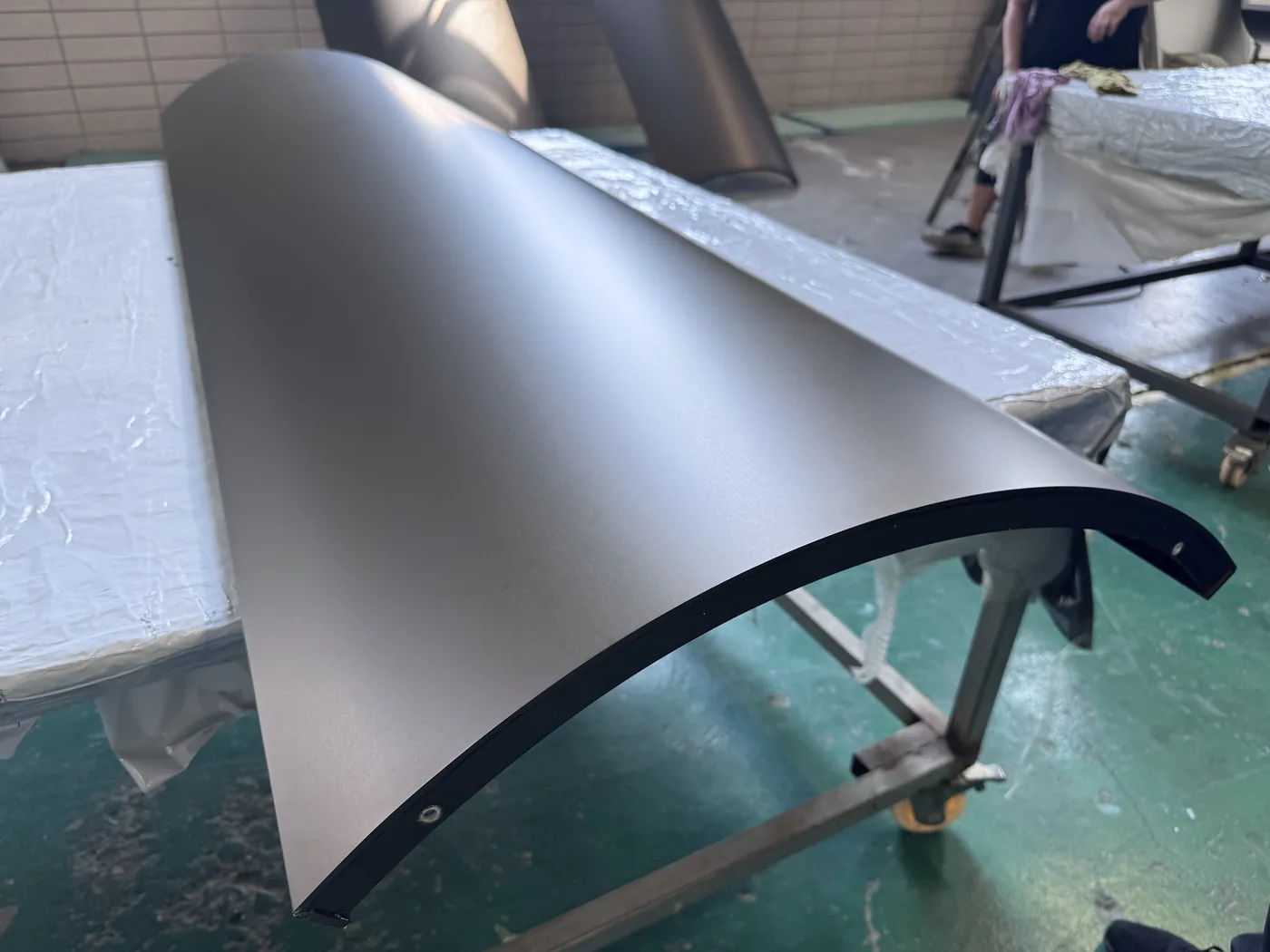
Curved facade panel under installation — single-bend forming up to 6 m spans
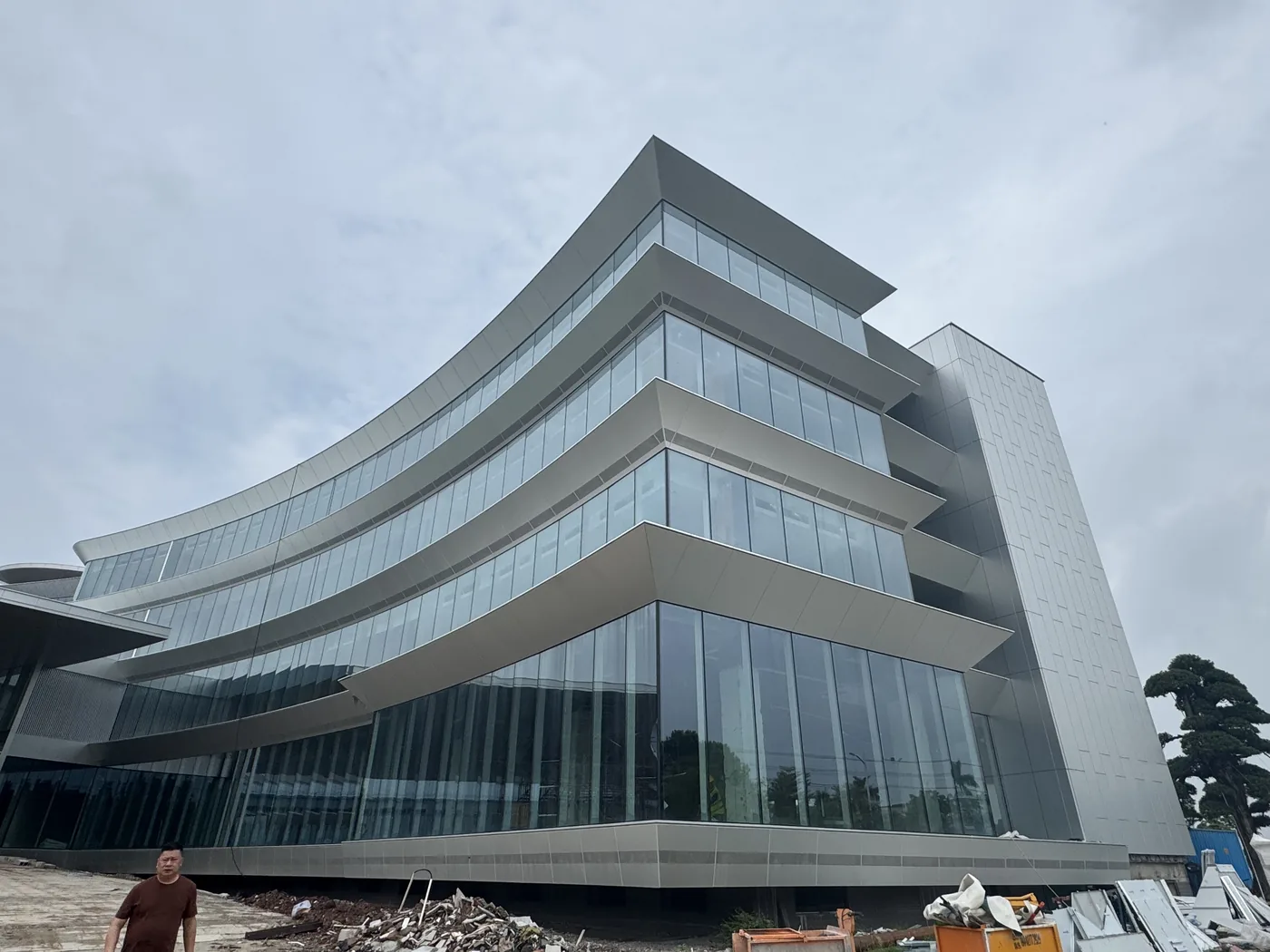
Silver curved office facade — anodised compound panels on a commercial tower
Selected Projects
Installations delivered across East Africa and the Gulf.
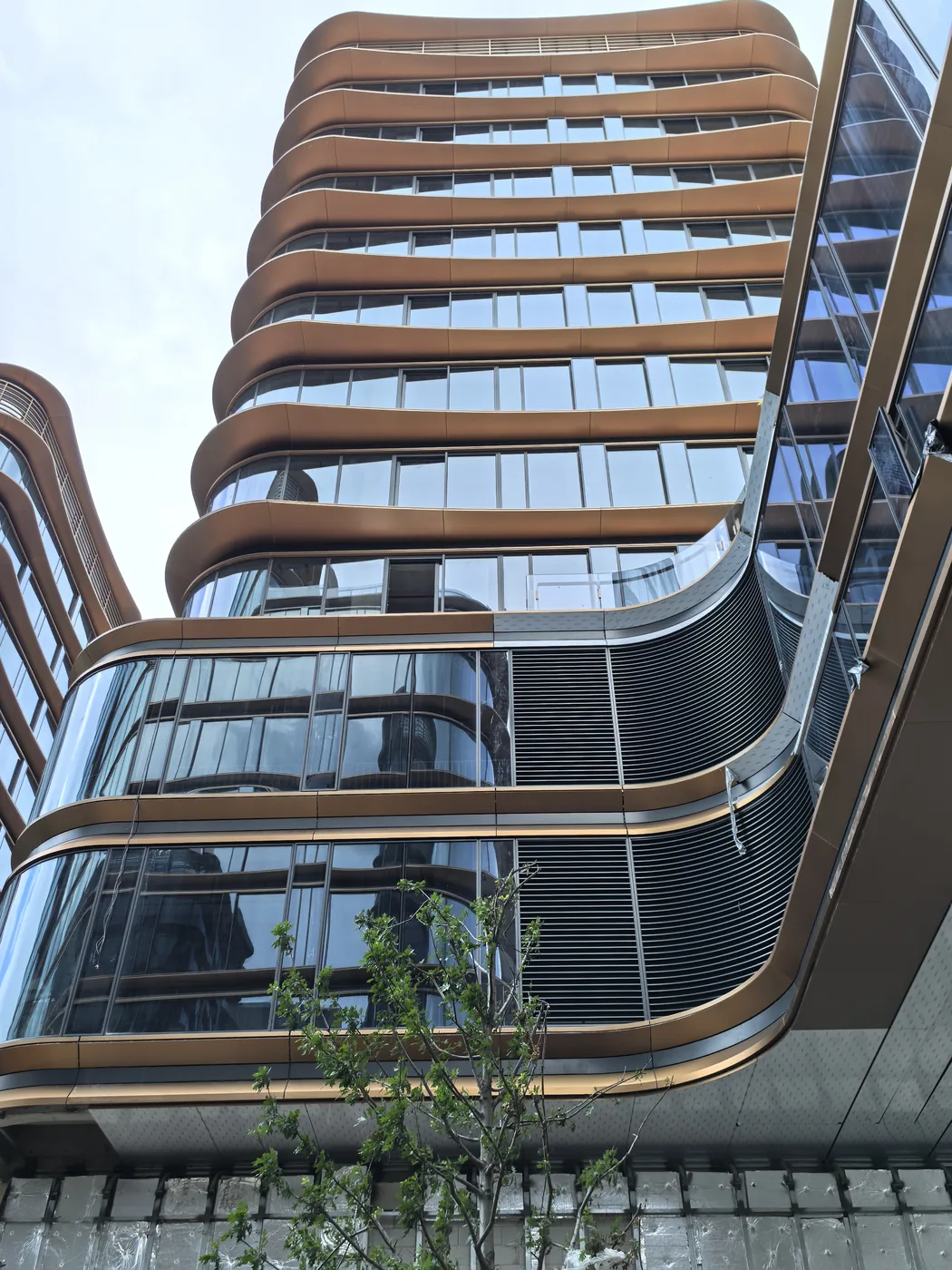
Copper-toned curved office facade — completed East Africa project
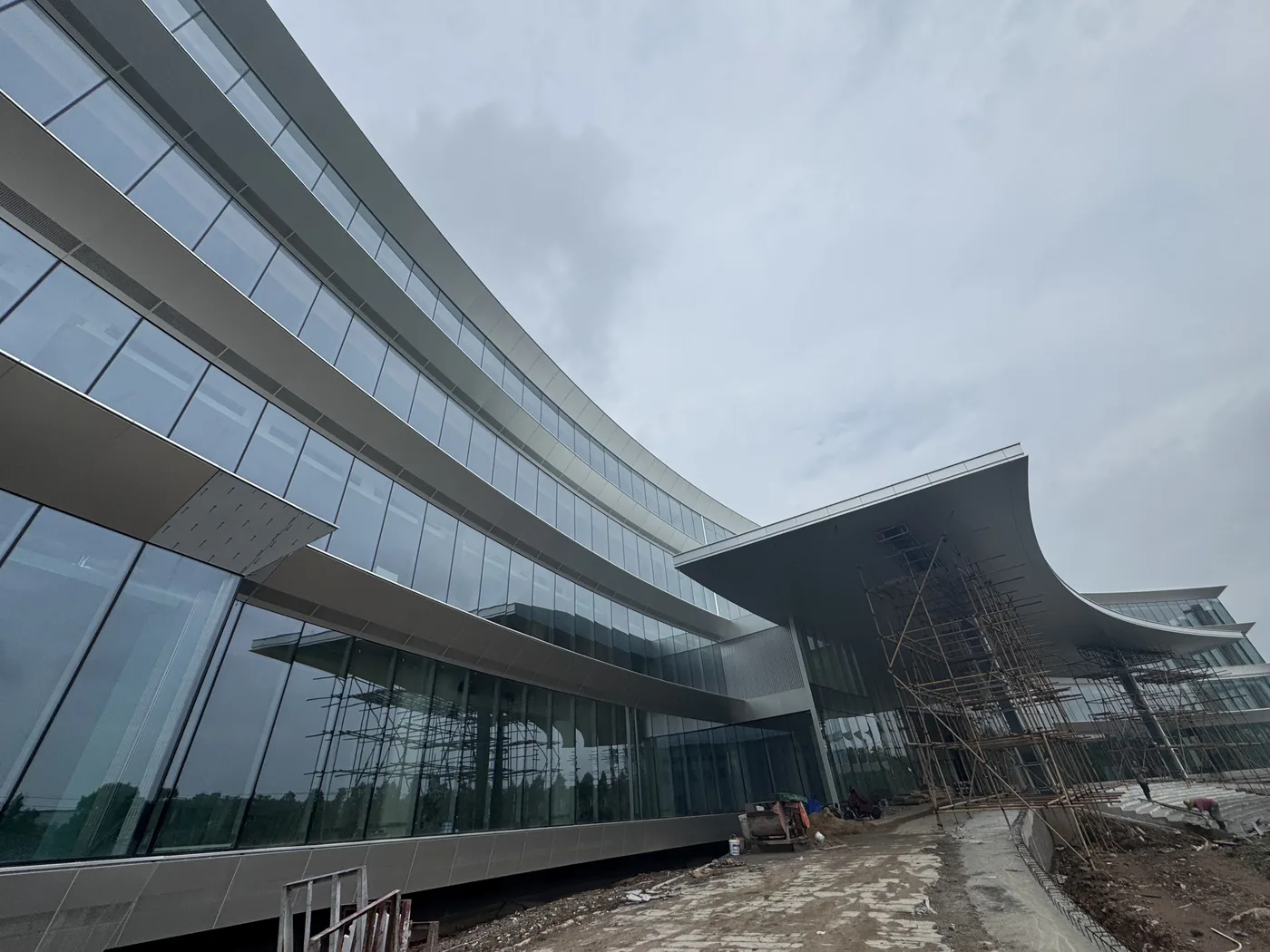
Wave-shaped public building — double-curved PVDF panels
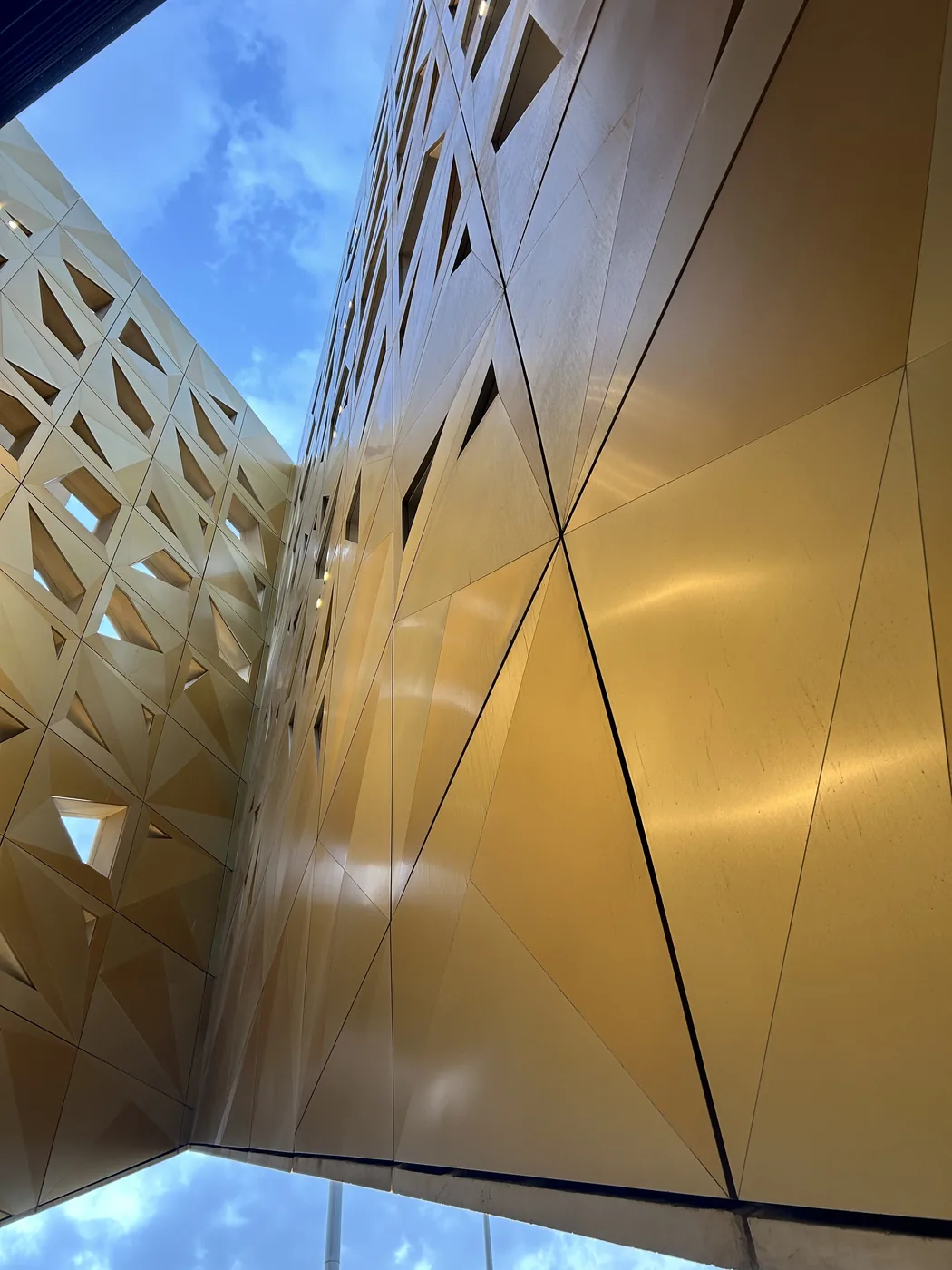
Golden perforated fractal facade — Pritzker-inspired geometry
Where it works
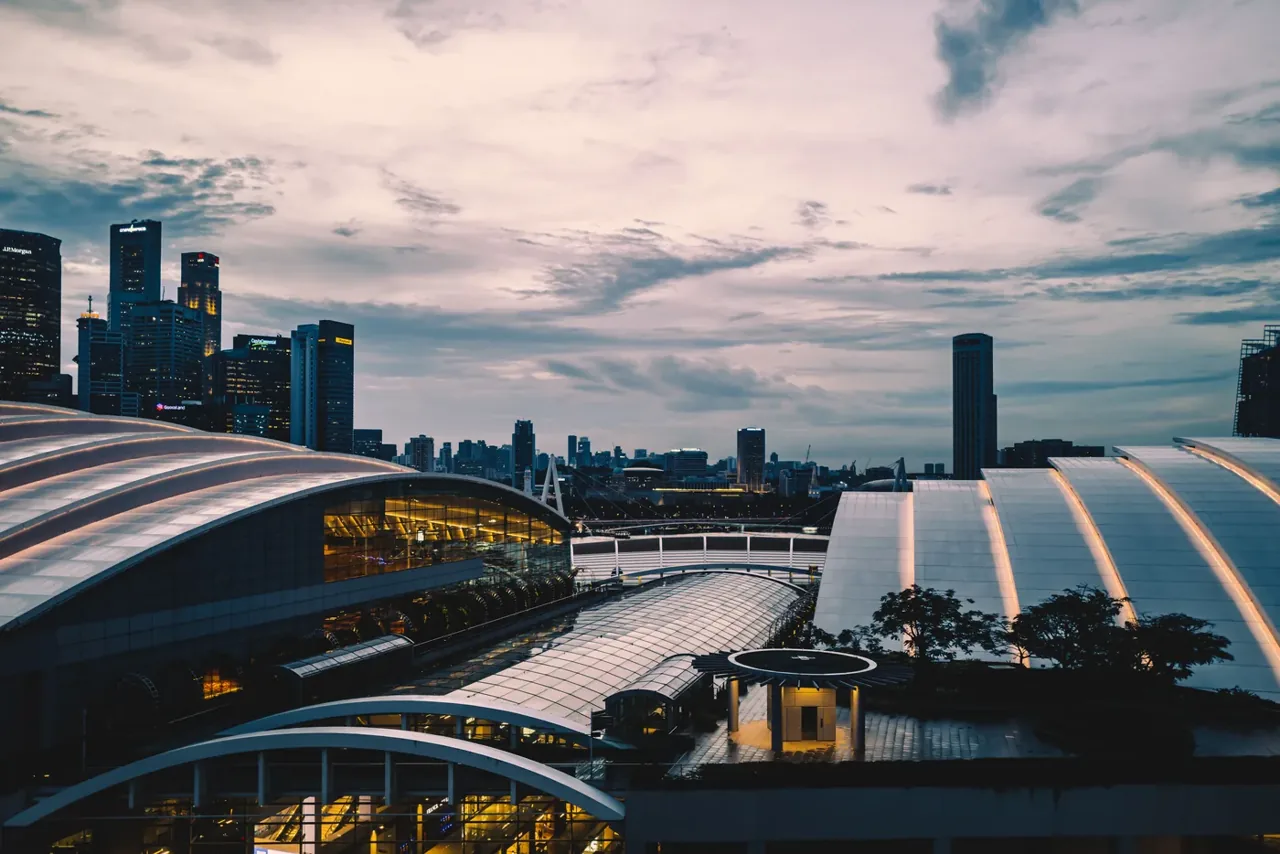
Commercial Buildings
Office towers, banks and retail, in anodised or PVDF finishes.
Hotels & Transport Hubs
Lobby ceilings, soffits and feature walls in high-traffic interiors.
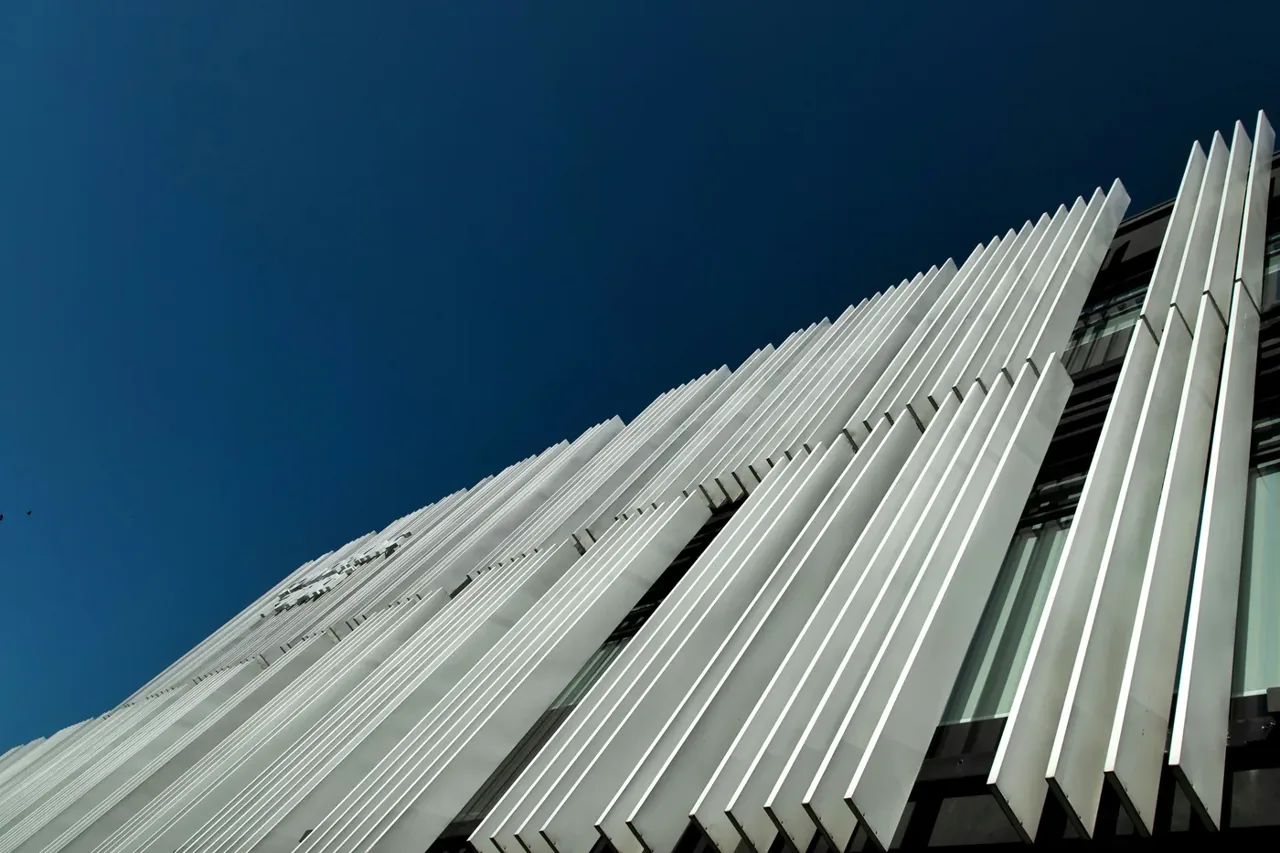
Public Facilities
Airports, stations and civic buildings, with A2 fire-rated panels.
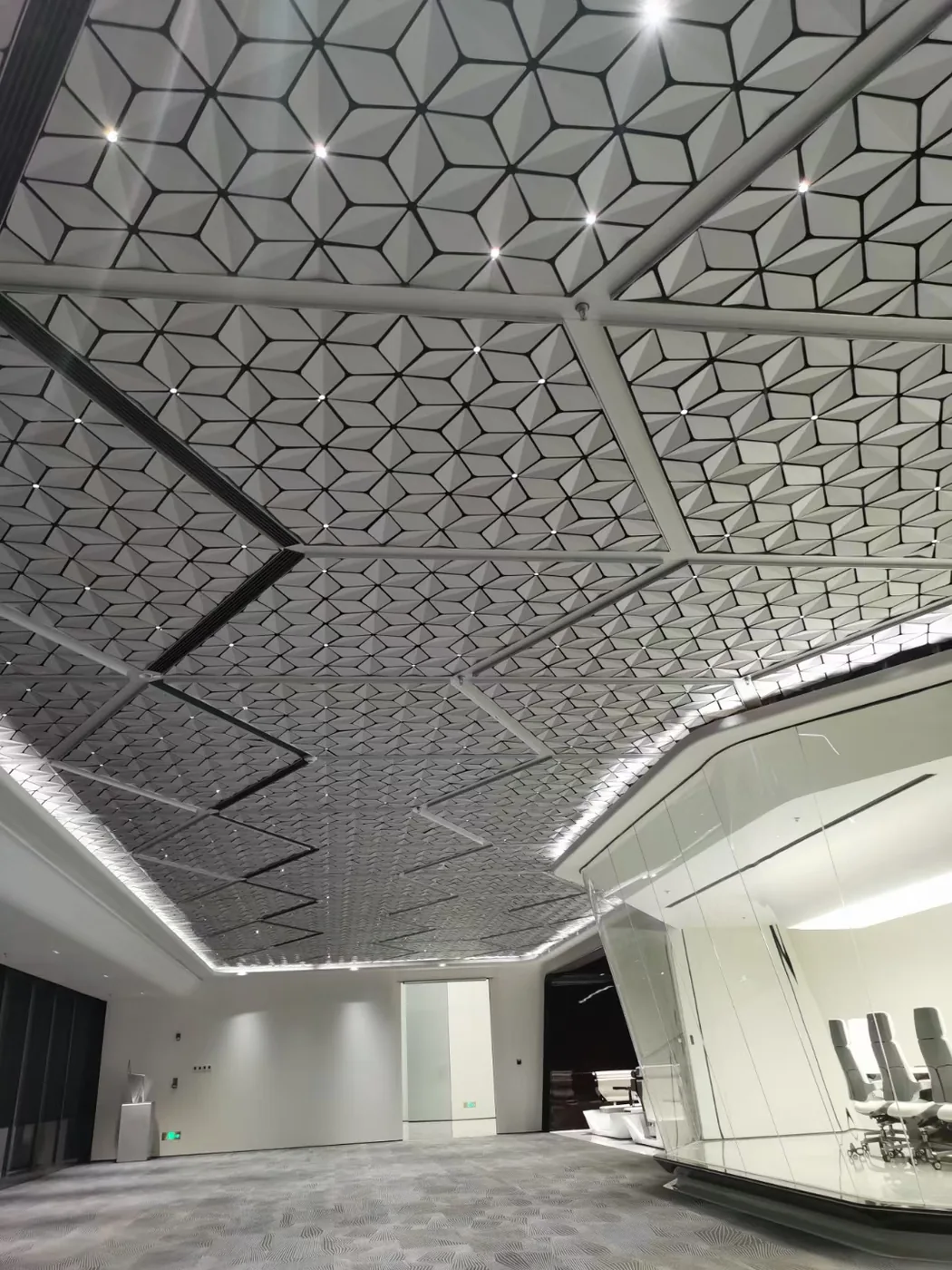
Office Lobbies
Faceted aluminium ceilings for corporate lobbies and reception zones.
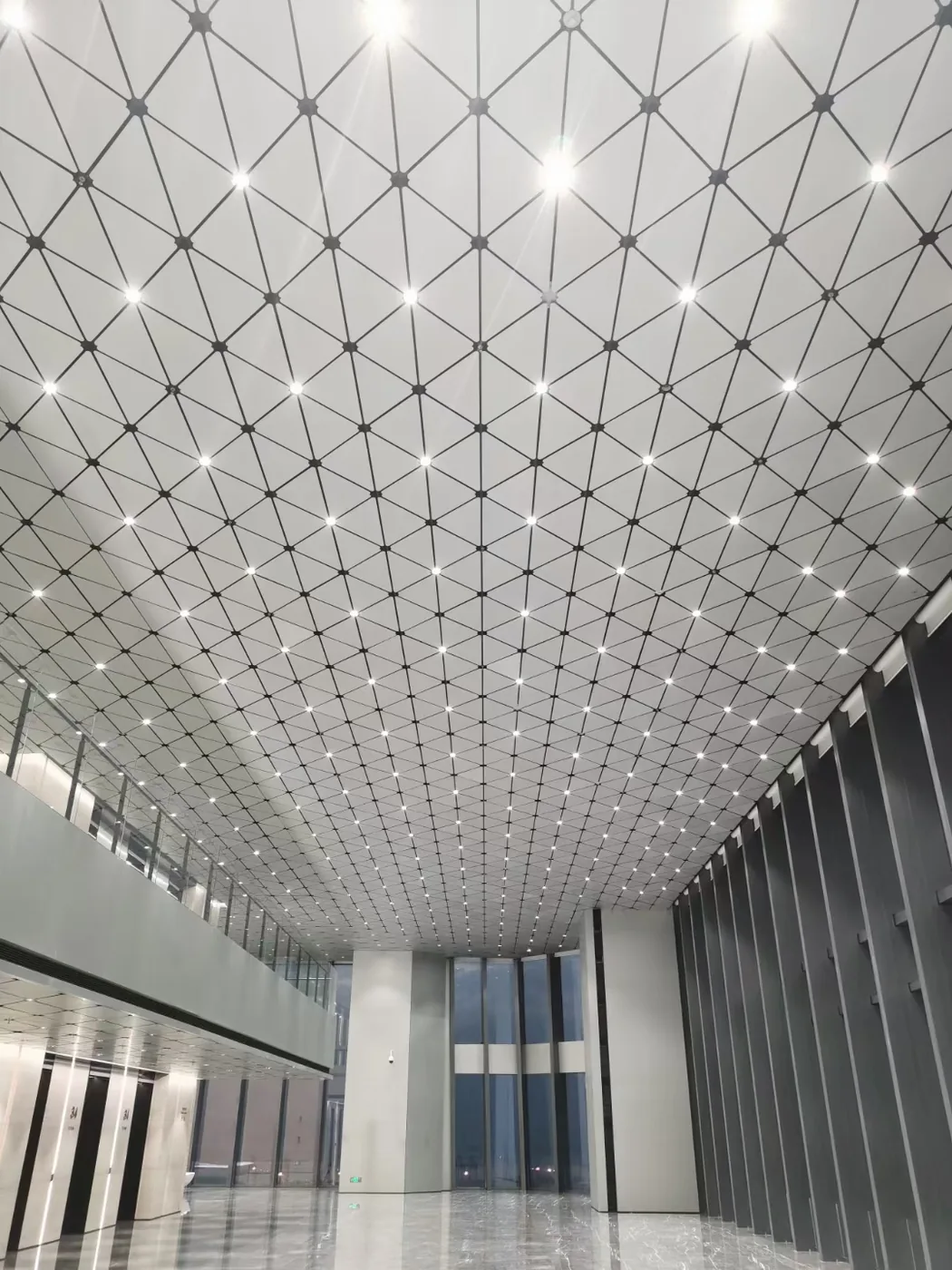
Atria & Malls
Open triangular-grid ceilings spanning large atriums and retail concourses.
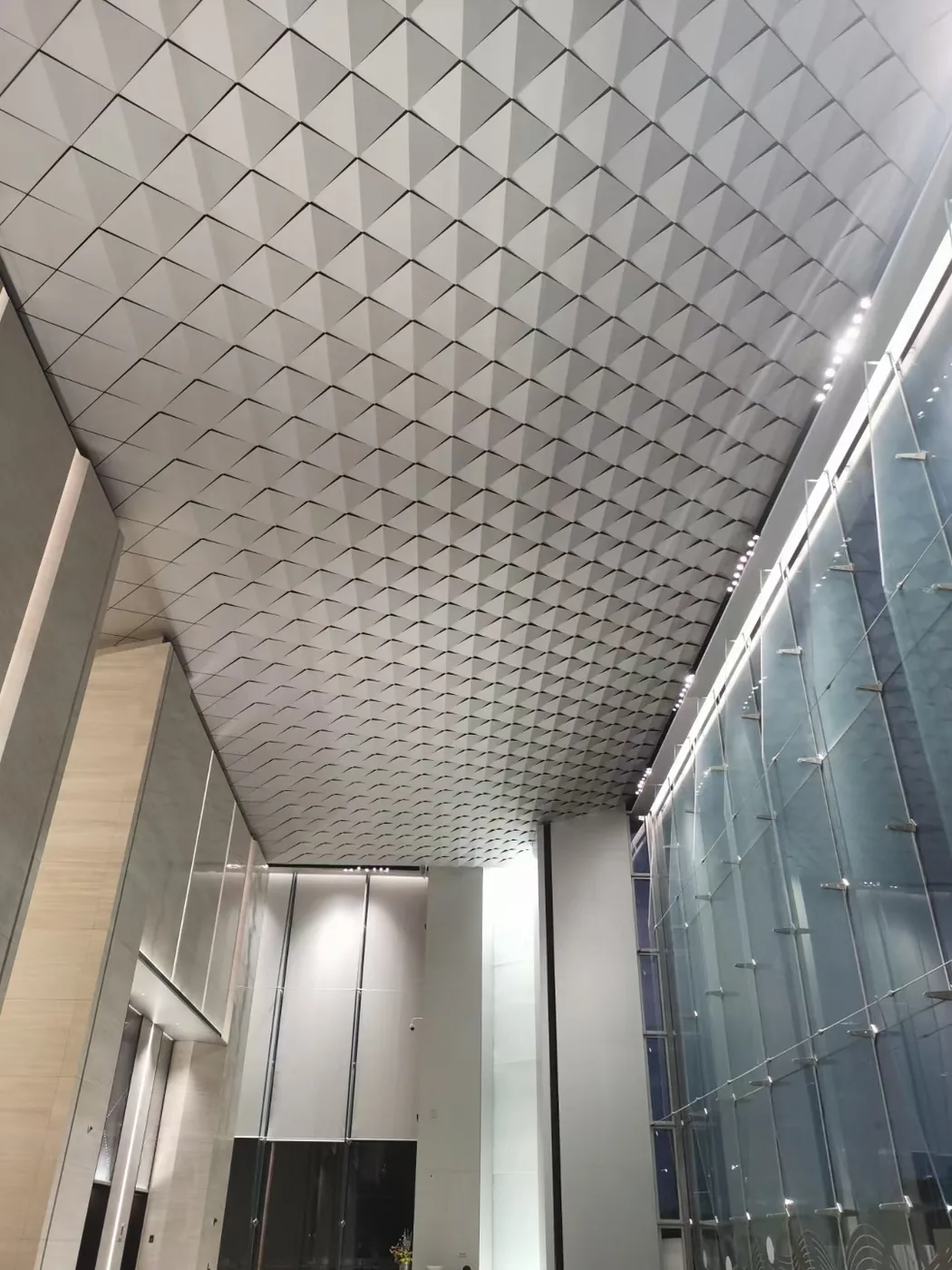
Entrance Halls
Diamond-folded aluminium ceilings for grand entrance halls and double-height foyers.
Specification
Selection & Technical Data
Panels are made to order. The table lists the alloys, finishes and performance figures available across the facade and ceiling systems; anything outside these ranges is quoted on request.
| Parameter | Options / Range |
|---|---|
| Panel types | Solid aluminum, honeycomb composite, corrugated, mineral-wool composite, perforated screen |
| Alloy | 1100 / 3003 / 5052, tempers O / H14 / H32 |
| Panel thickness | 1.5–4 mm formed panels; 4–6 mm composite; coil from 0.15 mm |
| Anodic film | 5–20 µm (AA5–AA25), surface hardness 200–500 HV |
| Finish | Anodised (natural, bronze, black, D-colour), PVDF fluorocarbon, powder coat, brushed, embossed, sand-blasted, wood-grain / stone transfer |
| Fire rating | A2-s1,d0 (EN 13501-1) and A2 to GB 8624-2012, non-combustible core; fr core options |
| Salt spray | 500–4,000 h neutral salt spray, by finish |
| Colour control | Full RAL plus anodised tones; same batch within ΔE 1.0–2.0, batch-to-batch within ΔE 2.0–2.5 |
| Panel size | Made to order, up to 1500 × 4000 mm; coil width to 1800 mm |
| Weight | About 5–8 kg/m² for 3 mm solid — light enough for over-cladding |
| Finish life | PVDF 20+ years colour and gloss retention; anodised film 25+ years |
| Design life | 25+ years with minimal maintenance; 96% of the aluminum recyclable at end of life |
| Process | Degrease → etch → neutralise → anodise → colour → seal |
| Certification | Anodised finishes produced under QUALANOD-certified architectural anodising (Lic. 2711) |
Operating Conditions
Weather-resistant across harsh sites
These panels are specified for Middle East and African coastal work, where sun, salt and humidity are hardest on a building skin. Anodised and PVDF finishes are salt-spray tested from 500 to 4,000 hours, so corrosion and colour fade stay minor over a 25-year design life. The finish options are compared in our aluminum cladding finishes guide. On vision areas the cladding is detailed to meet our unitised glazed curtain wall, and feature elevations are often animated with a wind-driven kinetic louver facade.
Aluminum weighs a fraction of what stone or concrete does, so over-cladding adds little structural load. That makes it practical for recladding, soffits and interior ceilings where weight matters. A2 and fr core options meet current cladding fire-safety rules for high-rise and public buildings; see our note on cladding fire safety. Perforated and 3D-formed panels can be tuned for daylight, branding and acoustic control. The same panel logic produced the 40,000-panel kinetic installation in Doha.
- Coastal & marine environments
- Hot, sunny desert climates
- High-rise & public buildings
- Retrofit & recladding
Related
Complete the envelope
Cladding carries the solid zones of a façade. These are the systems and references we most often engineer alongside it.
Unitised Glazed Curtain Wall
Factory-glazed modules for the vision areas, detailed to meet the cladding line with consistent shadow gaps and finishes.
View the glazing system →Kinetic Louver Facade
Wind-responsive aluminium panels that turn a clad elevation into a moving surface, with no motors or power supply.
View the kinetic system →Case study: Landmark Pavilion, Doha
Tens of thousands of wind-driven aluminium panels engineered for Gulf heat and Shamal winds, drawing zero power.
Read the case study →Where this system is specified
Cladding selection shifts with climate, corrosion exposure and local codes. See the market breakdowns.
Specify aluminum cladding for your next project
Download BrochureFAQ
Aluminum Cladding: Frequently Asked Questions
What is aluminum cladding used for?
They form the outer skin of a building: exterior facades, soffits, feature walls and interior ceilings. Panels are fabricated to order in custom sizes, shapes and perforation patterns, in anodised, PVDF or powder-coat finishes for indoor or outdoor use.
Is aluminum cladding fire-safe and weather-resistant?
Yes. The core is non-combustible and rated A2-s1,d0 (GB 8624-2012 / EN 13501-1). Finishes are salt-spray tested from 500 to 4,000 hours, so facades facing sun, rain and coastal humidity hold their colour. Standard and fr core options cover high-rise and public projects.
What cladding and ceiling systems does INDECO supply?
Four systems: lay-in tile ceilings on an exposed grid, clip-in tile ceilings on a concealed frame, deep combination ceilings, and composite honeycomb or mineral-wool panels. Each is used on facades, soffits, feature walls and interiors.
What finishes and colours are available?
Anodised (natural, bronze, black and D-colour), PVDF fluorocarbon, powder coat, brushed, embossed and sand-blasted, plus wood-grain and stone transfer. Any RAL colour can be matched; coil runs to 1800 mm wide and panels to about 1500 × 4000 mm.
How thick is the anodic film and how hard is the surface?
The anodic film is 5–20 µm (AA5–AA25), giving a surface hardness of 200–500 HV. Neutral salt-spray resistance runs from 500 hours for standard interior trim up to 4,000 hours for sand-blasted and heavy-exposure exteriors.
How do you control colour between batches?
Colour is measured, not eyeballed. Panels from the same batch are held within ΔE 1.0–2.0, and separate batches within ΔE 2.0–2.5. Send a physical sample or RAL reference and the anodised or coated finish is matched to it.
Can aluminum cladding be used on high-rise and public buildings?
Yes, with an A2-s1,d0 non-combustible core. Panels are supplied with fixing details for cassette, hook-on and secret-fix systems, and meet current cladding fire-safety rules for high-rise and public buildings.