Short answer: five questions separate a facade manufacturer from a trading company, and none of them is about price. Can they show you the factory and the extrusion or coating line behind the panel? Do they hold fire test reports for the specific thickness and build-up you are buying, or only a generic class statement? Can they produce a performance test report from an accredited laboratory for air, water, wind and movement? Do they have QC records that tie the tested assembly to the production line? And will the warranty be issued by the party that makes the product, with named inspection intervals? A supplier who answers all five is a manufacturer. One who answers two is a risk you are pricing into the facade.
Facade procurement attracts traders because the margin is in the arbitrage between a factory order and a project price, and the skill required to capture it is commercial rather than industrial. That is not automatically bad — a good trader with a strong factory relationship can deliver well. It becomes bad when the contract is written as if the trader were a manufacturer, with performance obligations the trader cannot technically discharge. This guide is about telling the two apart before the tender, not after the defect.
Is the supplier a manufacturer or a trader?
Six checks, in ascending order of how hard they are to fake.
| Check | What a manufacturer shows | What a trader shows |
|---|---|---|
| Factory address and capacity | Own line, extrusion press or coating line, stated capacity in m²/month | A partner's address, capacity described vaguely |
| Process control | Alloy certificate 6063-T5, anodising thickness AA25, coating thickness 25 µm PVDF, measured and recorded | Certificates from a third party, not per batch |
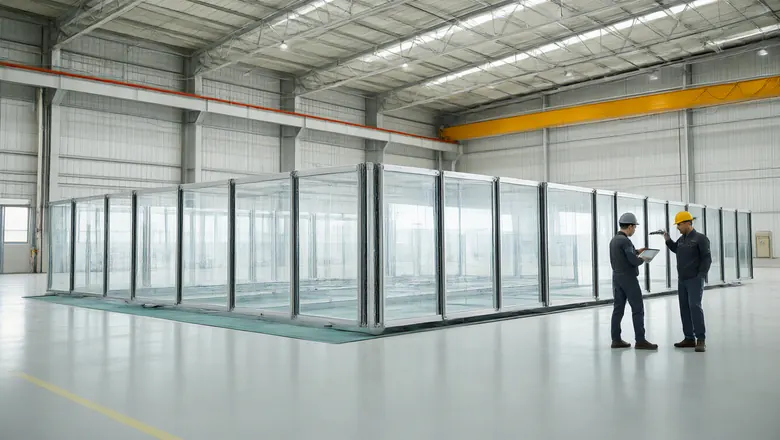
| In-house assembly | Unitised modules assembled and sealed under their own roof | Modules assembled by a subcontractor they do not control |
| Engineering staff | Named engineers who answer technical queries directly | A sales contact who forwards questions |
| Test ownership | Test reports in their own name, on their own assemblies | Reports belonging to the factory they buy from |
| Warranty issuer | The entity that makes the product | An intermediary, often with a shorter term than the product life |
The single most reliable signal is whether you can walk the line. A manufacturer will invite a factory audit and give you access to the QC station; a trader will offer a video call from an office. If an audit is refused or endlessly rescheduled, the answer to the question has already been given. The audit checklist that follows from this is in cladding manufacturer guide.
Which certificates actually matter?
Four, and the rest are decoration.
- Reaction-to-fire classification with the test report. EN 13501 A2-s1,d0 on a named thickness and build-up. The report, not a logo. It should name the mounting condition and the substrate, because a classification is only valid in the configuration tested.
- Performance test report from an accredited laboratory. Air permeability, water tightness, structural performance and, where relevant, seismic movement, on a full-size assembly. Check the accreditation scope covers the tests claimed — it often does not.
- Quality management certification. ISO 9001 is a floor, not a distinction. More useful is the factory production control documentation that sits under it: how alloy is verified, how coating thickness is measured, how a failed batch is quarantined.
- Material certificates per batch. Alloy and temper (6063-T5), anodising class (AA25), coating type and thickness (25 µm PVDF). These are the documents that let you prove at year eight that the panel you received was the panel specified.
Two certificate traps are common enough to name. A generic “A2 fire rated” statement with no test report referenced is not evidence, and in a regulated market it will be rejected. And a test report on a 4 mm panel does not cover a 3 mm panel of the same alloy — the classification is thickness-specific, and substituting a thinner gauge to save cost silently removes the compliance.
How do you verify a fire test report?
Six fields, all checkable in ten minutes, and any missing field is a finding.
- Laboratory and accreditation. Named laboratory, accredited for that test method, with a report number that can be verified independently.
- Product identification. Alloy, core material, thickness and finish, matching exactly what you are buying. Not a family name.
- Test standard and date. EN 13501-1 for classification, NFPA 285 for assembly. A report more than about five years old against a superseded standard needs a current equivalent.
- Mounting and substrate. The configuration tested: cavity depth, insulation type, substrate, and the presence or absence of a ventilation gap. This is the field most often inconsistent with what is actually specified.
- Result, not just the class. The measured values behind the classification, so you can see how close to a boundary the product sits.
- Validity of the certificate. Issue and expiry, and whether it covers the manufacturing site that will actually produce your order.
If the supplier cannot produce the mounting configuration, ask them to state in writing that the tested configuration matches the specified one. A manufacturer with a real test file will do it without hesitation; a trader will negotiate the wording, which is itself the answer. The detail behind each classification element is in codes and compliance.
What should a mock-up and performance test prove?
A mock-up proves two different things and they are usually bundled, which is where disputes start. The visual mock-up proves appearance: colour, gloss, joint width, flatness, shadow lines. The performance mock-up proves behaviour: air, water, wind, movement, thermal cycling.
| Test | Standard | What a pass actually means |
|---|---|---|
| Air permeability | EN 12152 class AE | Leakage below the class limit at 600 Pa — the assembly is genuinely tight, not just sealed at the joints |
| Water tightness | EN 12154 | No uncontrolled penetration at the specified pressure and rate, with the drainage path working as designed |
| Structural performance | EN 13116 / AAMA 501 | Deflection within L/175 or 20 mm at design load, then proof load at 1.5× without permanent set |
| Seismic / racking | AAMA 501.7 | Joints absorb the calculated drift; glass does not crack and the seals recover |
| Thermal cycling | Project-specific | No seal degradation or condensation failure across the specified cycles |
Sequence matters more than most specifications admit. Air and water first, then structural, then racking, then repeat the water test after racking. A water test performed only on a pristine assembly tells you what the facade does on day one; the test after racking tells you what it does in year five, which is the question the building actually faces. If a supplier proposes a different order, ask why — there is rarely a good engineering reason.
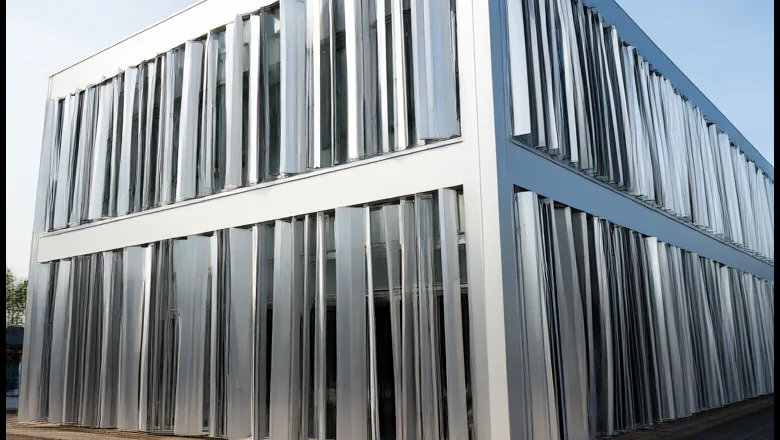
The full test regime for a glazed wall is set out in curtain wall testing; for a moving screen, cycling and actuation verification are added, covered in kinetic facade testing and commissioning.
Which red flags should end a conversation?
These are not preferences. Each one, on its own, is sufficient reason to stop.
- Refusal of a factory audit, or an audit that turns out to be a showroom visit with no production line visible.
- A fire class with no report number, or a report that names a different thickness or build-up than the one quoted.
- Performance data from a project, not a laboratory. “We did this on a tower in Dubai” is not a test result.
- Warranty issued by someone other than the manufacturer, or a warranty shorter than the coating's published durability.
- No QC records, or QC records that cannot be tied to your order. If the batch is untraceable at tender stage, it will be untraceable at defect stage.
- Technical queries answered only through sales, with no engineer ever on the call. On a moving facade this predicts commissioning problems.
- Price substantially below the market band with no engineering explanation. Something in the specification is being removed; the only question is which item.
What should the warranty and support terms cover?
A facade warranty has four separable parts, and suppliers routinely quote only the first.
- Product warranty — the panel, coating and glass against manufacturing defect, with a stated term against the published durability: 25 µm PVDF and AA25 anodising are normally warranted for a defined colour and film-integrity period.
- System performance warranty — the assembly against the tested performance: air, water, structural. This is the one that matters, and the one most often absent, because it requires the manufacturer to have tested the assembly in the first place.
- Movement and mechanism warranty — for a kinetic screen, the pivot bearings, springs and any actuators, with a stated cycle count or service interval rather than only a time period.
- Support obligations — inspection intervals, spare parts availability for the life of the asset, response times, and whether commissioning support is included or chargeable.
Two clauses worth negotiating explicitly. First, that the warranty is not voided by normal maintenance carried out by others, provided it follows the published procedure — otherwise the owner is locked to the supplier for 25 years. Second, that the tested configuration is referenced in the warranty, so a later material substitution by anyone becomes a documented breach rather than an argument. Get both in writing before award; neither is unusual, and a manufacturer with real test data will agree to both.
The commercial logic is simple: the facade is the element with the longest exposure and the hardest defects to remedy, and the warranty is the only instrument that transfers that risk. Paying 5% more to a manufacturer who will sign a system performance warranty is usually cheaper than paying 5% less to a trader and funding the remediation yourself. Our own evidence set, including fire test reports and performance certificates, is on the certifications page.
Ask who signs the warranty, not who quotes the price. The signature is the product.
Key takeaways
- Five checks separate a manufacturer from a trader, and none is about price: factory access, fire reports for your exact thickness and build-up, accredited performance test reports, QC records tied to your order, and a warranty issued by the party that makes the product.
- A generic “A2 fire rated” statement without a test report number is not evidence, and a 4 mm certificate does not cover a 3 mm panel of the same alloy — classification is thickness-specific.
- A fire report is only valid in the configuration tested: check the mounting condition, cavity depth, insulation type and substrate against what you are actually specifying.
- Sequence the performance mock-up as air and water, then structural, then racking, then water again after racking — the post-racking test is what predicts year five, not day one.
- Four warranty parts matter: product, system performance, mechanism and movements, and support obligations. The system performance warranty is the one that requires the manufacturer to have tested the assembly, so it is the one most often missing.
Frequently asked questions
How can I tell a facade manufacturer from a trading company?
Ask for a factory audit and access to the QC station. A manufacturer will invite you and show the extrusion or coating line; a trader will offer a video call from an office or reschedule indefinitely. Confirm that test reports are in their own name on their own assemblies, and that the warranty will be issued by the entity that makes the product.
Is an “A2 fire rated” claim enough for compliance?
No. You need the test report itself, naming the alloy, core, thickness and finish, plus the mounting condition and substrate — a classification is only valid in the configuration tested. A generic class statement without a report number is rejected in regulated markets, and a 4 mm certificate does not cover a 3 mm panel.
What order should the performance mock-up tests run in?
Air and water first, then structural performance, then seismic or racking, then repeat the water test after racking. Testing water only on a pristine assembly tells you day one; testing after racking tells you year five, which is the question the building actually faces.
What should a facade warranty cover?
Four things: the product against manufacturing defect, the system against its tested performance for air, water and structure, the mechanism and movement parts for a kinetic screen with a stated cycle count, and support obligations such as inspection intervals and spare-parts availability for the asset life.
Which red flags should end a supplier conversation?
Refusal of a factory audit, a fire class with no report number, performance data from a project rather than a laboratory, a warranty issued by someone other than the manufacturer, QC records that cannot be tied to your order, and a price far below the market band with no engineering explanation.
Sources
- EN 12152 — European air-permeability classification used in CE-marked curtain walling. CEN (CEN/TC 33/WG 6).
- EN 12154 — European watertightness classification for curtain walling. CEN (CEN/TC 33/WG 6).
Vetting facade suppliers right now?
Send us your tender shortlist questions. We return the evidence behind them: factory audit, fire test reports, performance certificates, QC records and warranty terms. See certifications or contact our team.

A2 Aluminum Cladding Manufacturer & Supplier Guide
Glazing Curtain Wall Quality Control: Factory Tolerances, Glazing and Inspection
Kinetic Facade Testing: Cycling, Water and Wind Verification
Aluminum Cladding Fire Safety: Why Solid Panels Are the Safer Choice
Aluminum Cladding · Aug 30, 2026

Kinetic Facade Commissioning and Handover: What Has to Be Proven on Site